

Written by Dr. med. Hind Hlali
German board-certified specialist physician. Physician-led medical coordination. Not a booking agency.
Stage 4 Cancer Treatment in Germany: Options and Cost
Physician-led review of advanced and metastatic cancer cases before specialist matching, tumor board coordination and hospital cost planning.
Table of Contents
- Understanding Stage 4 Cancer Treatment in Germany
- Biomarker Testing for Stage 4 Cancer Treatment in Germany
- Stage 4 Cancer Treatment Options in Germany
- Stage 4 Lung Cancer Treatment
- Stage 4 Colorectal and Colon Cancer
- Treatment by Cancer Type
- Role of the Tumor Board
- Second Opinions
- Common Misconceptions
- Symptom Control and Supportive Care
- Treatment Timeline
- Supporting Families
- Documents to Prepare
- Stage 4 Cancer Treatment Cost in Germany
- International Patients
- Patients from the USA
- Gulf and GCC Patients
- Finding Doctors and Surgeons
- Treatment Goals
- Treatment Fitness
- Patterns of Metastatic Spread
- Clinical Trials
- Detailed Cost Drivers
- Germany vs Switzerland
- Best Doctors & Surgeons
- Medical Explanation & Support
- How Coordination Works
- Why Physician-Led Matters
- Frequently Asked Questions
- Scientific and Official Sources
Stage 4 cancer treatment in Germany requires an individualized approach because metastatic disease can represent very different clinical situations depending on the cancer type, sites of spread, molecular profile, previous treatment and the patient’s general condition.
For international patients researching stage 4 cancer treatment in Germany, the central question should not simply be which hospital treats cancer. The more important question is which specialist team has relevant experience with the patient’s exact diagnosis, pattern of metastatic disease, biomarkers and previous treatment.
As a German-licensed, board-certified specialist physician who trained and practiced inside the German hospital system, I personally review stage 4 cancer cases, including imaging, pathology, biomarker results and previous treatment, before coordinating the case with an appropriate academic oncology team.
Treatment may involve systemic therapy, radiation, surgery or interventional treatment depending on the individual situation, while a multidisciplinary tumor board in Germany can help clarify complex treatment decisions.
Understanding Stage 4 Cancer
Stage 4 cancer, often described as metastatic cancer, generally means that malignant disease has spread from its original site to distant parts of the body.
A stage 4 diagnosis does not automatically mean that treatment options are exhausted. Many patients continue to receive active treatment, although the treatment goals and available options differ substantially according to cancer type and individual clinical situation.
Treatment may aim to slow or control disease, reduce symptoms, maintain function and preserve quality of life.
In selected situations involving a limited number of metastases, local treatment may also be considered as part of a broader multidisciplinary strategy.
What matters most is a thorough review of the complete picture: the primary tumor, location and extent of metastases, pathology, molecular findings, previous treatment, response to treatment and current clinical condition.
This is why two patients who both have stage 4 disease may receive completely different treatment plans.
Stage 4 cancer treatment in Germany increasingly relies on precise pathology and biomarker information to determine which systemic and targeted options are clinically appropriate.
Biomarker and Molecular Testing for Advanced Cancer
Modern metastatic cancer treatment in Germany increasingly depends on understanding the biological characteristics of a tumor rather than relying only on the organ in which it started.
Biomarker testing, molecular profiling or genomic testing may identify characteristics that influence whether targeted therapy, immunotherapy or another personalized treatment strategy could be relevant.
Depending on the cancer type, testing may assess specific gene alterations, receptor status, PD-L1 expression, microsatellite instability or other validated biomarkers.
The appropriate biomarker panel differs by diagnosis. Testing used for advanced lung cancer, for example, is not identical to testing used for colorectal, breast, melanoma or other malignancies.
This is why precision oncology and specialized pathology review can become particularly relevant when metastatic disease has progressed after previous treatment or when the next treatment line is unclear.
For international patients, stage 4 cancer treatment in Germany may combine systemic therapy with surgery, radiation or other local approaches when the individual disease pattern supports them.
Stage 4 Cancer Treatment Options in Germany
Stage 4 cancer treatment in Germany may involve one or several treatment modalities depending on the diagnosis, molecular profile, previous therapy, metastatic pattern and treatment objective.
Options may include chemotherapy, hormone therapy, targeted therapy, immunotherapy, radiation therapy, surgery, interventional oncology, nuclear medicine, participation in an appropriate clinical trial, and supportive or palliative treatment.
Systemic therapy is often central to stage 4 cancer treatment because it can address disease at multiple sites in the body.
Local treatments such as surgery, radiation or ablation may still play an important role for selected metastatic lesions, complications, symptom control or carefully selected oligometastatic disease.
Immunotherapy for stage 4 cancer is not one universal treatment. It is established for selected cancer types and clinical situations but is not appropriate for every metastatic tumor.
Likewise, targeted therapy depends on identifying a molecular alteration for which an evidence-based treatment exists.
Patients considering experimental therapies should understand whether the proposed treatment is standard of care, used only in selected situations, or still being studied in a clinical trial.
Stage 4 Lung Cancer Treatment in Germany
Stage 4 lung cancer treatment in Germany is one area where pathology and molecular testing can substantially influence the treatment pathway.
The first questions usually concern the exact lung cancer subtype, sites of metastatic disease, previous treatment and relevant molecular or immune biomarkers.
Depending on the diagnosis and biomarker findings, treatment may include chemotherapy, immunotherapy for lung cancer, targeted therapy for lung cancer, radiation therapy or combinations of these approaches.
When an actionable molecular alteration is identified, targeted treatment may be considered according to the specific mutation and current clinical evidence.
When immunotherapy is considered, tumor type, biomarker information, previous treatment and the patient’s clinical situation all matter.
Patients with brain metastases may require coordination between oncology, radiation oncology and, in selected situations, complex neurosurgery and academic neurology .
The stage 4 lung cancer treatment cost in Germany cannot be reduced to one universal price because expenses depend on molecular diagnostics, medications, treatment duration, radiation, hospitalization and the individual treatment protocol.
Stage 4 Colorectal and Colon Cancer Treatment in Germany
Stage 4 colorectal cancer treatment in Germany varies according to the primary tumor, location and extent of metastatic disease, molecular findings and previous treatment.
Patients researching stage 4 colon cancer treatment in Germany may have metastatic disease involving the liver, lungs, peritoneum or several sites.
Systemic therapy is frequently a central part of treatment, while molecular findings and the distribution of metastases can influence whether additional local treatment should be considered.
In selected cases with limited liver or lung metastases, surgery, ablation, radiation or other local approaches may be evaluated alongside systemic therapy.
Patients with peritoneal disease frequently encounter information about HIPEC treatment in Germany. HIPEC is not a standard treatment for every patient with stage 4 colorectal cancer.
Its potential role depends on the diagnosis, distribution of peritoneal disease, previous treatment, surgical resectability and multidisciplinary assessment.
The stage 4 colon cancer treatment cost in Germany and colon cancer treatment cost in Germany therefore depend strongly on whether treatment involves systemic therapy alone or includes complex surgery, radiation, ablation or another intervention.
Stage 4 Treatment by Cancer Type
Treatment planning at stage 4 differs significantly from one cancer type to another.
Metastatic breast cancer treatment is strongly influenced by hormone receptor status, HER2 status and other clinically relevant tumor characteristics.
Advanced prostate cancer treatment may involve hormone-based systemic treatment, chemotherapy, targeted approaches or selected nuclear medicine and radioligand treatments depending on disease characteristics and previous therapy.
This is why searches such as prostate cancer cost in Germany or cost of prostate cancer treatment in Germany cannot be answered accurately without knowing disease stage and the planned therapy.
Metastatic melanoma may involve immunotherapy or targeted treatment in suitable patients. The melanoma immunotherapy cost in Germany therefore depends heavily on the specific medication, treatment schedule and duration.
Liver, pancreatic, stomach, cervical, kidney and other metastatic cancers each have disease-specific treatment pathways.
A search such as liver cancer cost in Germany, stomach cancer treatment cost in Germany or pancreatic cancer cost in Germany requires an individualized treatment plan before a meaningful hospital estimate can be prepared.
A central advantage of planning stage 4 cancer treatment in Germany is access to multidisciplinary discussion when several specialties need to contribute to the same decision.
The Role of the Tumor Board in Stage 4 Cancer
For advanced or metastatic cancer, a multidisciplinary tumor board can be particularly valuable.
A tumor board may bring together medical oncology, surgery, radiation oncology, radiology, pathology and disease-specific specialists to review the case collectively.
This type of stage 4 cancer treatment plan review is especially important when there is uncertainty about whether metastatic lesions should be treated locally, whether molecular findings justify another systemic therapy or whether a clinical trial should be considered.
A second opinion before or during stage 4 cancer treatment in Germany can help clarify treatment sequencing, alternatives and whether additional molecular or specialist review is needed.
Second Opinions for Stage 4 Cancer in Germany
A second medical opinion can be particularly useful in advanced cancer when there is genuine uncertainty about the next treatment step.
Patients may seek a cancer second opinion in Germany when different oncologists have proposed different approaches, when first-line treatment has stopped working, when new molecular findings are available or when an experimental option has been suggested.
An international medical second opinion may also help a patient obtain an additional specialist assessment before deciding whether travelling to Germany is medically worthwhile.
Seeking a second opinion does not necessarily imply distrust of the existing treating team. Complex metastatic disease can genuinely benefit from another experienced perspective.
Common Misconceptions About Stage 4 Cancer
Misconception 1: Stage 4 always means exactly the same thing. It does not. A patient with one limited metastatic site may have a very different treatment pathway from someone with widespread disease involving several organs.
Misconception 2: If one treatment stops working, nothing else can be tried. Depending on the cancer type, biomarkers and previous treatment, another systemic therapy, local procedure, clinical trial or supportive strategy may still be reasonable to discuss.
Misconception 3: Immunotherapy is automatically better than chemotherapy. Immunotherapy is highly important in selected cancers and patients, but it is not universally appropriate.
Misconception 4: More aggressive treatment is always better. Potential benefit should be balanced against toxicity, functional status, expected benefit and the patient’s own treatment goals.
Misconception 5: Every cancer center has the same experience with complex stage 4 disease. Advanced metastatic cancer can require highly disease-specific oncology expertise, specialized pathology, molecular diagnostics and access to several specialties working together.
Symptom Control and Supportive Care
Alongside disease-directed treatment, symptom management and preservation of quality of life are important components of stage 4 cancer treatment in Germany.
Support may include pain management, treatment of nausea, fatigue or breathing difficulties, nutritional support, management of complications, rehabilitation and palliative-care input.
Palliative care does not necessarily mean active cancer treatment has stopped. It can be integrated alongside oncology treatment to improve symptom control and support both patients and families.
A Realistic Timeline From Medical File Review to Treatment
Planning stage 4 cancer treatment often carries real urgency, and unnecessary delays should be avoided.
At the same time, beginning treatment without complete pathology, imaging or relevant biomarker information can sometimes create avoidable problems later.
For international patients, the first stage generally involves assembling existing medical records, reviewing the diagnosis and previous therapy, identifying missing information and determining which oncology specialty should assess the case.
Additional molecular testing, specialist review, hospital scheduling and financial procedures can influence how quickly treatment can begin.
Exact appointment or treatment-start dates should therefore only be considered confirmed after the treating hospital has reviewed the case and provided formal scheduling.
Supporting Families Through a Stage 4 Diagnosis
A stage 4 diagnosis affects families as much as patients.
Beyond medical questions, families frequently need realistic guidance about travel, accommodation, treatment duration, financial planning and communication with the treating medical team.
For patients travelling internationally, these practical issues should ideally be discussed before treatment begins rather than becoming an unexpected burden after arrival.
Documents to Prepare Before Seeking Stage 4 Cancer Treatment in Germany
A well-prepared medical file can make specialist assessment more efficient.
Useful records commonly include:
- Pathology report confirming the diagnosis.
- Recent CT, MRI or PET/CT reports.
- Original imaging files when available.
- Operative reports from previous surgery.
- Radiation treatment summaries.
- Complete chemotherapy, immunotherapy or targeted-therapy history.
- Biomarker and molecular testing results.
- Recent laboratory results.
- Current medication list.
- A recent medical summary describing the patient’s current clinical condition.
There is no requirement to have every document perfectly organized before reaching out. Part of the coordination process is identifying what information may still be needed.
Stage 4 Cancer Treatment Cost in Germany
Searches such as stage 4 cancer treatment cost in Germany, stage 4 cancer cost in Germany, cancer treatment in Germany cost and cancer treatment Germany prices are understandable, particularly for international patients who must plan treatment before travelling.
However, there is no single meaningful price for stage 4 cancer treatment because one patient’s pathway may involve systemic therapy alone while another may require molecular diagnostics, surgery, radiation, interventional treatment or prolonged inpatient care.
The treating hospital generally needs to review the medical file and anticipated treatment plan before preparing an individual cost estimate.
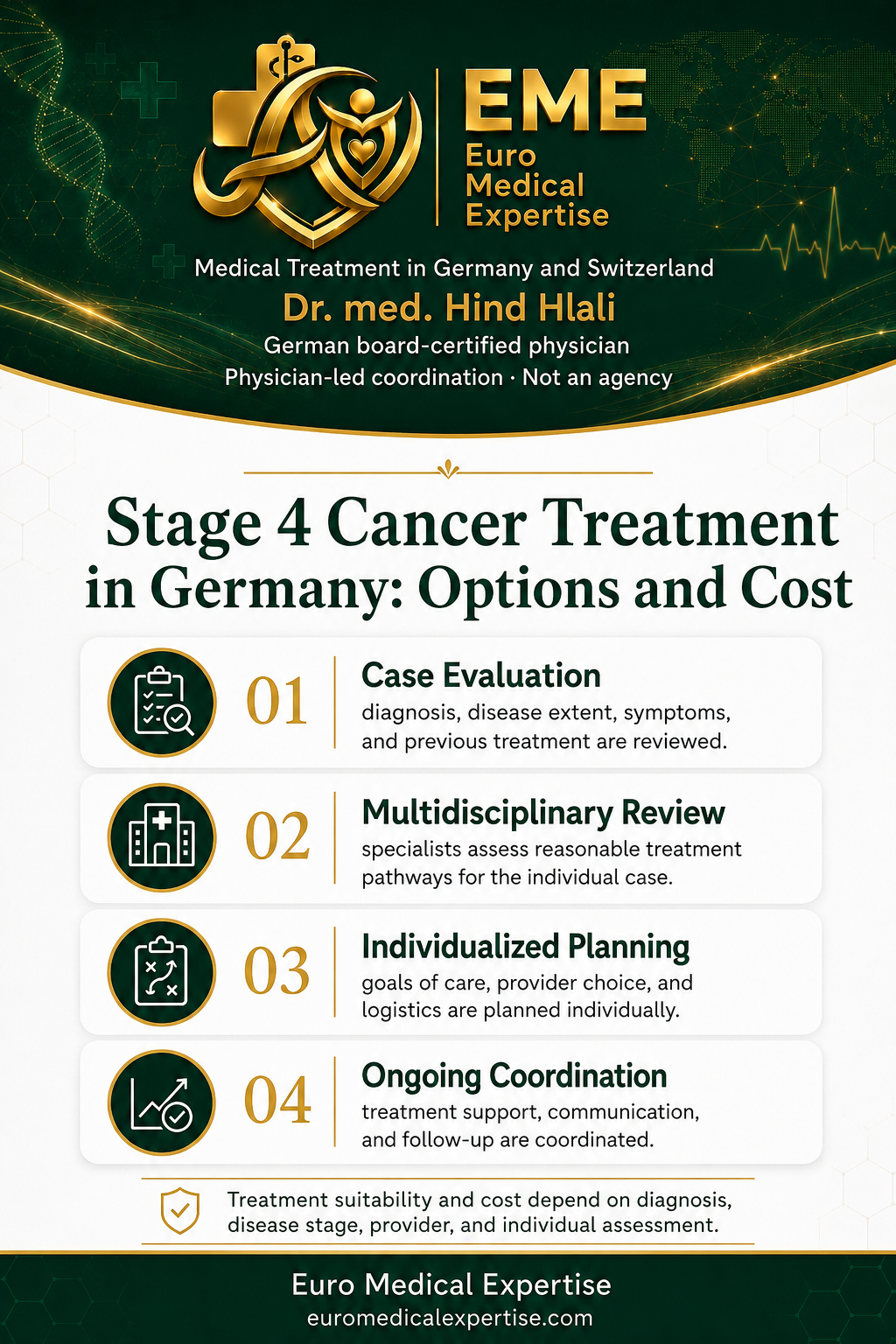
The infographic below summarizes the main medical and planning factors that may shape Stage 4 Cancer Treatment in Germany, including medical evaluation, diagnostic and molecular review, treatment options, specialist coordination, follow-up and cost considerations.
| No. | Treatment / Service | Cost Approach | Main Cost Factors |
|---|---|---|---|
| 1 | Initial Oncology Assessment and Diagnostic Work-up | Individual estimate | Specialist consultation, pathology review, imaging and laboratory testing. |
| 2 | Biomarker / Molecular Testing | Individual estimate | Cancer type, number of biomarkers, tissue availability and testing scope. |
| 3 | Chemotherapy | Individual estimate | Drug protocol, number of cycles, supportive medication and monitoring. |
| 4 | Immunotherapy | Individual estimate | Medication, dose, combination therapy, treatment interval and duration. |
| 5 | Targeted Therapy | Individual estimate | Molecular target, medication, dosage and expected treatment duration. |
| 6 | Radiation Therapy | Individual estimate | Radiation technique, treatment target, number of fractions and planning complexity. |
| 7 | Surgery for Selected Metastatic Disease | Individual hospital estimate | Organ involved, complexity, surgical technology, ICU requirements and hospital stay. |
| 8 | Stage 4 Lung Cancer Treatment | Individual hospital estimate | Molecular testing, chemotherapy, targeted therapy, immunotherapy, radiation and duration. |
| 9 | Stage 4 Colorectal / Colon Cancer Treatment | Individual hospital estimate | Systemic treatment and whether surgery, ablation, radiation or another local treatment is appropriate. |
| 10 | HIPEC / Cytoreductive Surgery | Individual specialist assessment and estimate | Diagnosis, peritoneal disease distribution, surgical complexity and hospitalization. |
| 11 | Complete Multimodal Stage 4 Cancer Treatment | Individual hospital estimate required | May include systemic treatment, imaging, specialist reviews, radiation, surgery and other procedures. |
Important: The cost of stage 4 cancer treatment in Germany should not be estimated from a generic package price. The final amount depends on the individual diagnosis and treatment plan and should be confirmed through an official hospital estimate.
For a broader explanation of hospital pricing, see our Medical Treatment in Germany Cost Guide .
Stage 4 Cancer Treatment in Germany for International Patients
Stage 4 cancer treatment in Germany for international patients should ideally begin with medical file review before travel.
This allows the diagnosis, previous therapy, imaging and molecular information to be evaluated so the case can be directed to an appropriate specialist or multidisciplinary team.
This approach is particularly important in advanced cancer because travelling internationally before confirming that a medically relevant pathway exists can create unnecessary cost, delay and stress.
Medical records may include pathology, imaging, treatment summaries, biomarker results and a current physician report.
International hospitals can then assess whether a consultation or treatment pathway can be offered and prepare the relevant financial documentation.
For a broader overview, read our Medical Treatment in Germany 2026 Complete Guide .
International patients and families may also benefit from full medical explanation by a specialist , especially when pathology, biomarker results, treatment sequences or tumor board recommendations are difficult to understand. Clear explanation is intended to support informed communication with the treating team rather than replace the treating physician.
During treatment abroad, structured in-clinic and ongoing patient support , family communication support and follow-up and post-treatment advocacy can help patients and relatives understand the practical and medical pathway before, during and after treatment.
Stage 4 Cancer Treatment in Germany for Patients from the USA
Patients from the United States may consider German specialist review when seeking an additional medical opinion, disease-specific expertise, multidisciplinary tumor board assessment or evaluation of another treatment strategy.
Stage 4 cancer treatment in Germany for US patients can begin remotely with review of pathology, imaging, biomarkers and previous treatment.
A US patient does not necessarily need to transfer the entire treatment pathway to Germany. In some cases, the purpose may simply be obtaining a second opinion or confirming whether another medically reasonable option exists.
A comparison of Germany vs USA cancer treatment should not assume that one healthcare system is universally superior.
The meaningful question is whether a particular German specialist or center offers disease-specific expertise or a treatment approach relevant to the individual case.
Stage 4 Cancer Treatment in Germany for Gulf and GCC Patients
Patients from Saudi Arabia, the UAE, Qatar, Kuwait, Bahrain and Oman can begin the assessment process remotely by submitting their medical documentation.
Searches such as stage 4 cancer treatment in Germany for Gulf patients, cancer treatment Germany for Saudi patients and cancer treatment Germany for UAE patients often reflect practical questions: which specialist is appropriate, whether another treatment option exists, how treatment costs are determined and how long a patient may need to remain abroad.
Useful records include imaging, pathology, biomarker findings, previous chemotherapy or immunotherapy records, surgery reports and a recent medical summary.
Hospital acceptance, treatment availability and final clinical recommendations depend on individual medical assessment and cannot be guaranteed beforehand.
Families accompanying the patient should also consider accommodation and the possibility that multi-cycle treatment may require an extended stay or repeated visits.
How to Find the Best Doctors and Surgeons in Germany for Stage 4 Cancer
International patients frequently search for the best doctors in Germany , best surgeons in Germany , best cancer doctors in Germany and best oncologists in Germany.
There is no responsible universal ranking that identifies one “best” doctor for every cancer patient.
The more useful question is which specialist has the appropriate subspecialty and experience for the individual disease.
- Experience with the exact cancer diagnosis.
- Experience treating advanced or metastatic disease.
- Disease-specific surgical case volume when surgery is relevant.
- Access to specialized pathology and molecular diagnostics.
- Participation in multidisciplinary tumor boards.
- Access to radiation oncology, nuclear medicine or interventional oncology when required.
- Experience with current systemic treatment approaches.
- Appropriate clinical-trial availability.
The same principle applies when patients search for the best doctors in Switzerland or best surgeons in Switzerland . Specialist matching should follow the diagnosis rather than a generic ranking.
Patients deciding between the two countries can read our Germany vs Switzerland medical treatment comparison , which explains differences in treatment pathways, specialist access, medical priorities and cost considerations for international patients.
Defining the Treatment Goal Before Choosing Therapy
One of the most important questions in stage 4 cancer care is not simply “Which treatment is strongest?” but “What is the realistic goal of treatment for this individual patient?” In many metastatic cancers, the principal goals are to control disease, reduce symptoms, maintain function and prolong life where possible. In selected situations with limited metastatic spread, a multidisciplinary team may consider a more intensive strategy that includes local treatment to all known disease sites. The terminology and probability of long-term control vary by cancer type, so the goal should be stated explicitly rather than assumed.
This discussion also needs to include the patient’s priorities. Two patients with the same diagnosis can reasonably make different choices when expected benefit, treatment burden, travel requirements and quality of life are considered. A medically sound plan explains the expected purpose of each intervention, the likely monitoring schedule and what would cause the team to stop, change or escalate treatment.
Eligibility for Stage 4 cancer treatment in Germany is assessed not only by cancer stage but also by the patient’s current performance status and organ function.
Performance Status, Organ Function and Treatment FitnessStage alone does not determine whether a patient can tolerate treatment. Oncologists also assess performance status, nutrition, blood counts, kidney and liver function, cardiovascular and pulmonary health, neurological symptoms, active infections and other medical conditions. These factors influence drug selection, dose, surgical risk and whether an inpatient or outpatient pathway is appropriate.
For international patients, a current clinical summary is particularly useful because a patient may have changed significantly since older records were issued. If the patient’s condition is deteriorating quickly, the priority may be urgent local stabilization rather than immediate long-distance travel. Travel should never delay treatment of an acute medical emergency.
Planning Stage 4 cancer treatment in Germany also requires careful assessment of where the cancer has spread and whether any metastatic sites need local treatment.
Why the Pattern of Metastatic Spread Matters“Stage 4” describes a broad category rather than one uniform clinical situation. A patient with one or a few metastatic lesions can have a very different treatment discussion from a patient with extensive disease involving several organs. The location of metastases also matters. Brain, bone, liver, lung and peritoneal involvement can each create different symptoms, complications and local treatment options.
When only a limited number of metastases are present, the tumor board may discuss whether surgery, stereotactic radiation, ablation or another local technique has a meaningful role alongside systemic therapy. When disease is widespread, systemic treatment usually becomes the central component, with local interventions used selectively for symptom relief or control of threatening lesions. These decisions require disease-specific expertise and should not be generalized from another patient’s experience.
For many patients, Stage 4 cancer treatment in Germany is organized as a sequence of therapies rather than one isolated treatment decision.
How Systemic Treatment Is SequencedFor many metastatic cancers, treatment unfolds through several lines of therapy. First-line treatment is selected according to cancer type, pathology, biomarkers, disease burden and patient fitness. Response is monitored, and the plan continues while it remains beneficial and tolerable. If the disease progresses, a second-line or later-line option may be considered based on what has already been used, how long the previous treatment worked and whether new molecular information is available.
This sequencing is one reason a complete treatment history matters. The names of drugs, dates, doses when available, reason for stopping, side effects and imaging response can all influence the next recommendation. Simply stating that a patient “had chemotherapy” is often not enough for a specialist to determine the most appropriate next step.
Clinical-trial assessment may become relevant during Stage 4 cancer treatment in Germany when standard options are limited or a specific molecular profile matches an investigational strategy.
Clinical Trials and Experimental OptionsPatients with advanced cancer frequently ask about clinical trials. Trials can provide access to investigational strategies, but eligibility is specific. Cancer type, molecular profile, prior treatment, organ function, performance status and the number or location of metastases may all affect whether a patient qualifies. A trial should therefore be considered as a structured research option with defined inclusion and exclusion criteria, not as a guaranteed “last treatment.”
When a standard treatment remains appropriate, the oncology team may recommend that before an experimental option. Conversely, when standard lines have been exhausted or a molecular finding matches an investigational therapy, trial screening may be worthwhile. International patients should also clarify practical issues such as required visit frequency, which costs are covered by the study, and whether follow-up must remain at the trial center.
Managing Complications of Advanced Cancer
Stage 4 cancer can produce complications that require treatment independently of the main anti-cancer strategy. Examples include pain, obstruction, bleeding, infection, fluid accumulation, bone instability, neurological symptoms or nutritional decline. Some complications need urgent procedures or hospital admission before systemic therapy can safely continue.
Supportive care is therefore integrated with oncology rather than postponed until all anti-cancer treatment has ended. Early symptom management can improve the patient’s ability to eat, move, sleep and tolerate treatment. For families traveling internationally, knowing who to contact for fever, breathing difficulty, uncontrolled pain, confusion or other acute symptoms is an important part of safe planning.
Detailed Cost Drivers for Stage 4 Cancer Treatment in Germany
There is no single valid price for stage 4 cancer treatment because the term can describe many diseases and treatment pathways. A short diagnostic review followed by outpatient systemic therapy is financially different from a pathway involving complex surgery, intensive inpatient care, radiation and months of high-cost medication. The hospital estimate is therefore built around the actual medical plan.
Important cost drivers include pathology review, molecular testing, radiology, specialist consultations, tumor board review, systemic drugs, infusion services, radiation planning and sessions, surgery, anesthesia, intensive care when needed, length of stay, supportive medicines and management of complications. Patients should ask whether an estimate covers only the initial diagnostic phase, one treatment cycle or the complete planned course. They should also ask how additional costs are handled if the plan changes after new test results.
International patients should maintain a separate budget for non-medical expenses. Accommodation can become significant when treatment lasts for weeks or months, particularly when a family member accompanies the patient. Local transportation, translation, visa-related expenses and repeated flights may also contribute substantially to the total financial burden even though they are not part of the hospital invoice.
Stage 4 Cancer Treatment in Germany for Patients from the USA
Patients from the United States may seek a German review when they want an independent second opinion, a different multidisciplinary perspective, review of complex imaging or pathology, or assessment of whether another treatment sequence is reasonable. The purpose of international care should be defined before travel. Germany is not automatically the better option simply because it is abroad; the question is whether a particular German center can add clinically meaningful expertise to the case.
US patients should obtain written information about insurance coverage for planned care outside the United States. When treatment is self-funded, the German hospital generally provides an estimate after medical review and may require payment in advance. For long treatment courses, it is also important to clarify whether part of the recommended therapy can be delivered by the patient’s oncologist at home.
Stage 4 Cancer Treatment in Germany for Gulf and GCC Patients
Patients from Saudi Arabia, the UAE, Qatar, Kuwait, Oman and Bahrain often benefit from starting with remote review. This avoids unnecessary travel before the German center has confirmed that the medical question is appropriate for its specialists. Complete pathology, imaging and treatment history can be reviewed first, and missing investigations can be identified before appointments are finalized.
Arabic-language medical explanation can be especially valuable when a family is comparing several complex recommendations. The aim is not merely translation of words, but clarification of what each option is intended to achieve, what evidence supports it, what side effects are relevant and what practical commitments are required. Visa and entry requirements should be verified through current official channels because rules can change.
Germany vs Switzerland for Complex Stage 4 Cancer
Germany and Switzerland both offer advanced oncology services, and country-level comparisons are less useful than center-level matching. A patient may benefit from Germany because a particular university hospital has the required disease-specific tumor board, surgical program or molecular pathology expertise. Another patient may find that a Swiss center is better aligned with the clinical question or practical circumstances.
Our Germany vs Switzerland treatment comparison explains the broader factors to consider. For stage 4 cancer, the decision should prioritize disease-specific expertise, treatment availability, multidisciplinary depth, expected length of stay, cost estimate, language support and the feasibility of continuing follow-up after the patient returns home.
Best Doctors and Surgeons in Germany and Switzerland: What “Best” Should Mean
Searches for the best doctors in Germany, best surgeons in Germany, best doctors in Switzerland and best surgeons in Switzerland are understandable, especially after a stage 4 diagnosis. However, the most famous physician is not necessarily the right physician for every metastatic cancer. A colorectal cancer patient with potentially resectable liver metastases needs a different expert combination from a lung cancer patient requiring molecularly guided systemic therapy or a patient with brain metastases requiring neuro-oncology input.
Specialist selection should therefore be based on the exact diagnosis, organ involvement, previous treatment and immediate decision that needs to be made. The surrounding institution matters as well: pathology, radiology, intensive care, radiation oncology and other specialties may be essential to the final plan. Physician-led coordination focuses on matching the case to the relevant expertise rather than presenting a generic ranking of doctors.
Medical Explanation, Decision Support and Communication
Stage 4 cancer treatment generates complex medical information quickly. A patient may hear terms such as progression, partial response, actionable mutation, maintenance therapy, oligometastatic disease, performance status or palliative radiation without having enough time to understand how they affect the next decision. Medical explanation should convert these terms into a clear treatment map without oversimplifying uncertainty.
Decision support also means acknowledging when more than one medically reasonable option exists. In such situations, the patient’s goals, tolerance for side effects, travel burden and quality-of-life priorities become part of the decision. The physician’s role is to explain the trade-offs and help the patient ask the right questions, not to promise an outcome that medicine cannot guarantee.
International Patient Checklist Before Travel
- Collect the pathology report and, when requested, information on how tissue slides or blocks can be transferred.
- Provide recent CT, MRI or PET/CT reports together with the actual imaging files whenever possible.
- List every previous anti-cancer treatment with approximate dates and the reason it was stopped.
- Include molecular or biomarker reports, not only a summary stating that testing was “negative.”
- Prepare a current medication list and relevant medical conditions.
- Clarify the main question you want the German team to answer.
- Request a written hospital estimate after the center has reviewed the case.
- Confirm how long the first visit is expected to take and whether a family member should accompany the patient.
- Discuss travel fitness with the treating physician if the patient has significant symptoms or rapidly changing health.
- Keep copies of important medical records available during travel.
Additional Questions International Patients Ask
Is stage 4 cancer always terminal?
Stage 4 describes metastatic spread, but prognosis varies greatly by cancer type, biology, treatment response and overall health. Some metastatic cancers can be controlled for prolonged periods, while others progress more rapidly. Individual prognosis should be discussed with the treating oncology team.
Can stage 4 cancer ever be treated with curative intent?
In selected cancers and carefully selected patients with limited metastatic disease, multidisciplinary teams may consider intensive local and systemic treatment with long-term disease control or curative intent as a goal. This is not applicable to all stage 4 cases and requires specialist review.
Can I get a German cancer second opinion while staying in the USA or Gulf?
An initial review can often begin remotely using medical reports and imaging. Whether a formal remote opinion or an in-person assessment is possible depends on the center and the clinical question.
Should I travel before receiving a hospital estimate?
Usually it is more practical to complete medical review first, clarify whether the center can help, and request an estimate before committing to travel, unless urgent clinical circumstances require a different approach.
How do I compare two different cancer treatment recommendations?
Compare the treatment goal, evidence supporting each option, expected benefit, major risks, monitoring requirements, alternatives and what happens if the treatment does not work. A structured second opinion can help clarify why recommendations differ.
Can my oncologist at home work with the German team?
Often this is useful, especially when part of treatment or follow-up will continue in the home country. The exact communication and shared-care arrangement depends on the treating institutions.
Building a Safe International Treatment Plan
Stage 4 cancer treatment for international patients is more than obtaining an appointment. A safe plan identifies who is responsible for each phase of care: diagnostic review, treatment prescription, laboratory monitoring, management of side effects, emergency care and follow-up imaging. When treatment is shared between Germany and the patient’s home country, both teams should understand which part of the pathway they are supervising.
The expected length of stay should be clarified before flights and accommodation are finalized. Some patients travel for a focused second opinion and return home quickly. Others need additional pathology, molecular testing, surgery, radiation or the first cycles of systemic treatment and therefore require a longer stay. The medical schedule should determine the travel schedule, not the other way around.
Patients should also travel with a current medication list and a concise medical summary. This is especially important when the patient takes anticoagulants, insulin, pain medication, steroids or treatment for heart, kidney or neurological conditions. These medicines can affect procedures and cancer therapy and should be reviewed by the treating team.
How Treatment Response Is Assessed
After stage 4 cancer treatment begins, the oncology team evaluates whether the cancer is responding, stable or progressing. This assessment can include symptoms, physical examination, laboratory results and repeat imaging. The timing and type of imaging depend on the cancer and therapy. A treatment that is working may be continued, while progression or unacceptable toxicity can trigger a new discussion about the next line of treatment.
Response assessment is also a point at which a second opinion may become useful. If the scan is difficult to interpret, if one area is progressing while the rest of the disease remains controlled, or if the next recommended treatment has limited expected benefit, multidisciplinary review can help clarify whether systemic therapy should change or whether a local treatment has a role.
Nutrition, Strength and Functional Support
Advanced cancer can reduce appetite, weight and muscle strength. These changes can influence treatment tolerance and recovery from procedures. Nutritional support, symptom control and appropriate rehabilitation may therefore be integrated into the treatment pathway. The aim is to preserve function and help the patient tolerate evidence-based treatment, not to substitute alternative diets for oncology care.
Patients should discuss supplements and complementary products with the oncology team. Some can interact with anti-cancer medicines, anticoagulants or anesthesia. Claims that a supplement, restrictive diet or unproven infusion can cure metastatic cancer should be treated with caution, particularly when the provider discourages standard oncology care.
When Symptoms Require Urgent Local Care
Not every problem should wait for an international consultation. Severe breathing difficulty, uncontrolled bleeding, new confusion, seizures, sudden weakness, signs of severe infection, uncontrolled pain or rapidly worsening general condition can require immediate assessment where the patient is located. International coordination is valuable for planned specialist care, but it is not a substitute for emergency medicine.
Before traveling, patients with significant symptoms should discuss fitness to fly with their treating physician. Long flights can be challenging for patients with low oxygen levels, recent surgery, significant anemia, thrombosis risk or unstable symptoms. The safest travel plan is based on the patient’s current condition rather than on the urgency felt by the family.
Choosing a center for Stage 4 cancer treatment in Germany should be based on disease-specific expertise, multidisciplinary resources and the exact clinical question that needs to be answered.
How to Evaluate a German or Swiss Cancer CenterFor complex stage 4 cancer, center selection should be tied to the disease and the clinical question. Important factors include disease-specific oncology expertise, multidisciplinary tumor board access, pathology and molecular diagnostics, relevant surgical and radiation programs, experience managing complications and the ability to coordinate long-term follow-up. A center that is excellent for one cancer may not be the most appropriate choice for another.
International patients should also evaluate communication. Ask how medical records are submitted, how quickly missing information is identified, whether a written recommendation is provided, how hospital estimates are prepared and who can be contacted after the consultation. Clear processes reduce delays and help families distinguish medical decisions from administrative steps.
Quality of Life and Decisions About Further Treatment
When several lines of stage 4 cancer treatment have already been used, the decision to continue active anti-cancer therapy becomes increasingly individualized. The existence of another drug does not automatically mean that receiving it is the best choice. The oncology team should consider the expected probability and duration of benefit, likely side effects, the patient’s functional status and personal goals.
Supportive and palliative care can be provided at the same time as active treatment. When the burden of further therapy is likely to exceed its benefit, a greater focus on comfort can be a medically appropriate decision rather than a failure of care. These conversations are difficult, but clear and compassionate explanation helps patients and families make choices aligned with their priorities.
A high-quality review of Stage 4 cancer treatment in Germany should give the patient a clear understanding of the recommended pathway, alternatives, monitoring and practical next steps.
What a High-Quality Stage 4 Cancer Review Should ClarifyA useful stage 4 cancer treatment review should leave the patient with answers to practical questions: Is the diagnosis confirmed? What is the extent of disease? Are important biomarkers missing? What is the treatment goal? Which treatment is recommended now and why? What alternatives exist? What are the major risks? How will response be monitored? Which symptoms require urgent attention? Can part of treatment be delivered at home? What is the expected duration of the first treatment phase?
These questions create a framework for comparing recommendations from different hospitals. Instead of choosing based on promises or prestige alone, the patient can compare whether each plan addresses the same medical facts and explains its reasoning. This is particularly important for international families who may receive several proposals with different costs and levels of complexity.
What Happens at the First Cancer Consultation in Germany?
When records have been submitted in advance, the first consultation can focus on the decisions that matter most. The specialist reviews the diagnosis, metastatic pattern, previous treatment, current symptoms, organ function and relevant biomarkers. If information is incomplete, additional pathology, imaging or laboratory tests may be requested before the final recommendation is made. Complex cases may then be discussed in a multidisciplinary tumor board.
Patients should leave the consultation understanding the treatment goal, recommended next step, alternatives, major risks, expected monitoring and practical duration of the first treatment phase. International patients should also clarify whether subsequent treatment can be delivered in their home country and what information the local oncologist will need.
Common Questions About Stage 4 Cancer Treatment in Germany
People searching for stage 4 cancer treatment in Germany frequently want to know whether German hospitals offer options that are unavailable elsewhere. Germany has broad access to modern oncology, surgery, radiation and molecular diagnostics, but the value of treatment abroad depends on the individual case. A new technology is not automatically beneficial simply because it exists.
Patients also ask whether Germany can provide a cure after another country has said the disease is incurable. No responsible service can promise that. A German specialist may identify another evidence-based treatment, a different sequence, a local intervention for selected metastases or a relevant trial, but the prognosis still depends on the biology and extent of the cancer and the patient’s response.
Another important question is whether to travel immediately. In many cases, remote file review should come first so the center can confirm that the proposed visit has a clear medical purpose. If the patient has urgent symptoms, however, immediate local medical assessment may be more important than waiting for international coordination.
How Coordination Works
Physician-led coordination for stage 4 cancer treatment in Germany starts with the medical question first and only then moves to specialist matching, hospital coordination and practical planning.
Why Physician-Led Coordination Matters
Unlike simple booking services, Euro Medical Expertise provides physician-led medical coordination for patients seeking stage 4 cancer treatment in Germany.
Before a hospital is suggested, the medical case itself is reviewed so specialist matching reflects the diagnosis, disease stage, biomarkers, previous treatment and current clinical situation.
Learn more about professional medical coordination by a medical specialist in Germany and about Dr. Hind .
Related Oncology and Medical Coordination Services
- Expert Second Medical Opinion : Specialist review before major treatment decisions.
- Oncology and Tumor Board Review : Multidisciplinary discussion for complex cancer cases.
- Oncology and Advanced Cancer Therapy : Cancer treatment coordination across major diagnoses.
- Complex Neurosurgery and Academic Neurology : Coordination for selected cases involving brain metastases.
- Specialized High-Precision Surgery : Coordination for technically demanding surgical cases.
- Medical Treatment in Germany Cost Guide : How hospital estimates and international patient costs work.
- Medical Treatment in Germany 2026: Complete Guide : Treatment pathways, specialties and planning for international patients.
- Germany vs Switzerland : Comparing treatment destinations according to the individual medical situation.
- Medical Treatment in Germany : Main hub for international patient coordination.
- Best Doctors and Surgeons in Germany : How international patients can approach specialist and surgeon selection according to the specific diagnosis.
- Best Doctors and Surgeons in Switzerland : Specialist matching and access to medical expertise in Switzerland for international patients.
- Full Medical Explanation : Clear physician-led explanation of diagnoses, treatment pathways and next steps for patients and families.
- In-Clinic and Ongoing Patient Support : Practical and medical support during the treatment journey.
- Family Communication Support : Structured communication support for relatives during treatment abroad.
- Follow-Up and Post-Treatment Advocacy : Continued coordination after treatment and communication with the treating team.
Considering Stage 4 Cancer Treatment in Germany?
Send the available imaging, pathology, biomarker results and previous treatment history for physician-led review before specialist and hospital coordination.
WhatsApp Dr. Hind Send Your Medical CaseBelow are common questions international patients ask when considering stage 4 cancer treatment in Germany.
Frequently Asked Questions About Stage 4 Cancer Treatment in Germany
Does stage 4 cancer mean treatment is no longer possible?
No. Many patients with metastatic cancer continue to receive active treatment. The available options and goals depend on cancer type, extent of disease, biomarkers, previous treatment and general condition.
What are the options for stage 4 cancer treatment in Germany?
Stage 4 cancer treatment in Germany may include chemotherapy, immunotherapy, targeted therapy, hormone therapy, radiation, surgery or other local treatment in selected cases. The appropriate combination depends on the individual diagnosis.
How much does stage 4 cancer treatment in Germany cost?
There is no single fixed price. Costs depend on cancer type, diagnostics, medications, number of treatment cycles, radiation, surgery, hospital stay and other services. A meaningful estimate requires an individual treatment plan.
How is stage 4 lung cancer treated in Germany?
Stage 4 lung cancer treatment in Germany depends on the exact cancer subtype, molecular findings, immune biomarkers, metastatic sites, previous therapy and general health.
How much does stage 4 lung cancer treatment cost in Germany?
Costs vary according to molecular testing, chemotherapy, immunotherapy or targeted medication, radiation requirements and treatment duration. An individualized hospital estimate is required.
How is stage 4 colorectal cancer treated in Germany?
Stage 4 colorectal cancer treatment in Germany depends on the sites of metastasis, tumor biology, molecular findings and previous treatment.
How much does stage 4 colon cancer treatment cost in Germany?
Costs depend on systemic treatment and whether surgery, liver-directed treatment, radiation, ablation, HIPEC or another intervention is medically appropriate.
Is HIPEC used for stage 4 colorectal cancer in Germany?
HIPEC may be considered in selected patients with appropriate peritoneal disease, but it is not suitable for every patient with metastatic colorectal cancer.
Is immunotherapy available for stage 4 cancer in Germany?
Immunotherapy is an established option for selected cancers and clinical situations, but it is not suitable for every stage 4 tumor. Cancer type, biomarkers and previous treatment are important factors.
Why is biomarker testing important for stage 4 cancer?
Biomarker and molecular testing may identify tumor characteristics that influence whether targeted therapy, immunotherapy or another personalized treatment strategy could be relevant.
Is surgery ever possible for stage 4 cancer?
Yes, in selected situations. Surgery may be considered for limited metastatic disease, certain complications or other disease-specific indications.
Should I get a second opinion for stage 4 cancer?
A second opinion may be valuable when treatment recommendations differ, first-line therapy has failed, new molecular findings are available or an experimental treatment is being considered.
Can I get an international cancer second opinion from Germany?
Many international cases can begin with remote medical-file review before any travel decision. Availability of a formal remote second opinion depends on the specialist and treating institution.
What documents are required for a stage 4 cancer review?
Useful records include pathology reports, recent imaging, imaging files, previous treatment summaries, surgery and radiation reports, biomarker results, laboratory tests and a current medical summary.
Can international patients receive stage 4 cancer treatment in Germany?
International patients can submit their medical cases for assessment. Whether treatment can be offered depends on diagnosis, clinical condition, available options and individual hospital review.
Can US patients receive stage 4 cancer treatment in Germany?
US patients may submit their records to German specialists or hospitals for assessment, second opinion or treatment evaluation. The medical review can often begin before travel.
Why might a US cancer patient seek a second opinion in Germany?
Reasons may include obtaining another perspective on a complex case, confirming a treatment strategy, consulting a disease-specific specialist or evaluating an additional treatment approach.
Is stage 4 cancer treatment in Germany better than in the USA?
Neither country is universally better for every patient. The relevant choice depends on diagnosis, specialist expertise, available treatment options, previous therapy, cost considerations and individual priorities.
Can patients from Saudi Arabia receive stage 4 cancer treatment in Germany?
Saudi patients can begin by submitting their medical records for review. If an appropriate treatment pathway is identified, specialist, hospital, cost and travel coordination can follow.
Can UAE patients receive stage 4 cancer treatment in Germany?
Patients from the UAE can begin with remote medical-file review before deciding whether a specialist consultation, second opinion or treatment pathway in Germany is appropriate.
Can patients from Qatar or Kuwait seek cancer treatment in Germany?
Yes. Cases from Qatar and Kuwait can be submitted for medical assessment. Treatment recommendations and hospital acceptance depend on the individual case.
Can patients from Bahrain or Oman seek stage 4 cancer treatment in Germany?
Patients from Bahrain and Oman can also begin with remote medical-file review before specialist, hospital and travel coordination.
How much does stage 4 cancer treatment in Germany cost for Gulf patients?
Treatment cost is determined by the medical plan rather than nationality. Diagnostics, medication, surgery, radiation, hospital stay and treatment duration all influence the final estimate.
Do German hospitals require international patients to pay before treatment?
International self-paying treatment may involve a formal hospital estimate and advance payment before planned treatment, depending on the hospital and treatment arrangement.
How can I find the best cancer doctors in Germany?
Rather than relying only on general rankings, look for specialists whose subspecialty, experience with the exact diagnosis, metastatic-cancer expertise, tumor board access and hospital resources match the individual case.
How can I find the best cancer surgeon in Germany?
Relevant factors include disease-specific surgical experience, procedural volume where available, multidisciplinary review, hospital resources and whether surgery is actually indicated.
Germany or Switzerland: which is better for advanced cancer treatment?
The more appropriate destination depends on the specific cancer, specialist expertise required, treatment availability, cost, travel considerations and the individual patient’s medical priorities.
What is the difference between a booking agency and physician-led coordination for stage 4 cancer?
A booking service generally begins with hospital availability. Physician-led coordination begins with the medical case itself, reviewing diagnosis, imaging, pathology, molecular information and previous treatment before matching the patient with an appropriate specialist team.
Scientific and Official Sources
- German Cancer Research Center (DKFZ) / Krebsinformationsdienst.
- German Cancer Society and German evidence-based oncology guideline framework.
- AWMF / Leitlinienprogramm Onkologie.
- European Society for Medical Oncology (ESMO) clinical practice guidelines.
- Official German university hospital international-patient information regarding medical-file review and individual treatment assessment.
This article is for informational purposes only and does not constitute medical advice. Stage 4 cancer treatment options, eligibility, treatment costs, clinical trial availability and expected outcomes depend on the individual diagnosis, pathology, molecular profile, extent of disease, previous treatment, current health status and treating medical team’s assessment. Always consult a qualified medical professional before making healthcare decisions.
All rights reserved. This content may not be copied or reproduced without prior written permission from Dr. med. Hind Hlali and Euro Medical Expertise.




Leave a Reply