

Written by Dr. med. Hind Hlali
German-licensed, board-certified specialist physician. inside German hospitals. Not a booking agency.
Stage 4 Lung Cancer Treatment in Germany: Options & Cost
Physician-led review of pathology, staging and molecular biomarkers before matching advanced lung cancer cases with an appropriate oncology team.
Table of Contents
- Who This Page Is For
- Understanding Stage 4 Lung Cancer
- Diagnosis, Staging and Molecular Testing
- Treatment Options
- Immunotherapy
- Targeted Therapy
- Radiation and Local Treatment
- Brain Metastases
- Tumor Board Review
- Second Opinion
- Options and Cost in Germany
- International Patients
- USA Patients
- Gulf and GCC Patients
- Doctors, Surgeons and Germany vs Switzerland
- Medical Explanation and Patient Support
- Documents to Prepare
- A Realistic Timeline
- How Coordination Works
- Why Physician-Led Matters
- Related Services and Internal Links
- Diagnostic Review
- Molecular Testing
- Immunotherapy, Targeted Therapy & Chemotherapy
- What Changes Treatment Cost?
- Gulf / GCC Patients
- USA Patients
- Germany vs Switzerland
- Best Doctors & Surgeons
- Medical Explanation & Support
- Frequently Asked Questions
- Scientific and Official Sources
Stage 4 Lung Cancer Treatment in Germany is based on the exact lung cancer subtype, pathology, metastatic pattern, molecular biomarkers, previous treatment and the patient’s overall clinical condition. For advanced non-small cell lung cancer in particular, treatment can differ substantially depending on whether the tumor carries an actionable molecular alteration or whether immunotherapy is appropriate.
For international patients, the goal should not simply be to find a hospital that advertises lung cancer care. A meaningful pathway begins with a review of pathology, imaging, staging and molecular results so the case can be matched to an oncology team with the relevant disease-specific expertise.
As a German-licensed, board-certified specialist physician with inside German hospitals, I review each case personally before coordinating access to an appropriate oncology center, specialist or multidisciplinary tumor board. This physician-led process is designed to help patients understand the medical reasoning behind their options before making travel or treatment decisions.
Who This Page Is For
- Patients with newly diagnosed or recurrent lung cancer seeking a treatment plan review.
- Patients wanting a second medical opinion before starting or changing treatment.
- Patients with stage 4 lung cancer or metastatic lung cancer.
- Patients whose treating team has mentioned immunotherapy for lung cancer or targeted therapy for lung cancer.
- Patients whose disease has progressed after first-line treatment and who need another specialist review.
- International patients from the USA, Saudi Arabia, UAE, Qatar, Kuwait, Bahrain, Oman or other countries considering treatment in Germany.
Understanding Stage 4 Lung Cancer
Stage 4 lung cancer means that the disease has spread beyond its original location in the lung. The pattern of spread can vary considerably. Some patients have metastases in one or a limited number of sites, while others have disease involving several organs. This distinction can influence treatment planning.
Lung cancer is broadly divided into non-small cell lung cancer (NSCLC) and small cell lung cancer (SCLC). These are biologically different diseases and are treated differently. Within NSCLC, histological subtype and molecular findings can further change the treatment pathway.
For most stage 4 cases, systemic therapy is central because treatment needs to address cancer cells in more than one location. However, selected local treatments such as radiation, surgery or ablative procedures may also be used for specific metastatic sites, symptom control or carefully selected oligometastatic disease.
Diagnosis, Staging and Molecular Testing
An accurate treatment plan requires more than confirming that a mass is present in the lung. Pathology should establish the cancer subtype, imaging should define the disease extent, and appropriate molecular or biomarker testing should be considered according to the diagnosis.
For advanced NSCLC, molecular testing may assess clinically relevant alterations such as EGFR, ALK, ROS1, BRAF, MET, RET, NTRK, HER2 or KRAS in appropriate cases. PD-L1 testing may also help inform whether an immune checkpoint inhibitor is appropriate. The exact testing strategy depends on pathology and current guideline-based practice.
This is one of the reasons personalized lung cancer treatment has become so important. A patient with an actionable molecular alteration may have a very different first-line treatment pathway from another patient with apparently similar stage 4 disease but no actionable alteration.
For patients evaluating options, Stage 4 Lung Cancer Treatment in Germany should be based on confirmed histology, staging and molecular findings rather than on stage alone.
Treatment Options for Stage 4 Lung Cancer in Germany
Stage 4 Lung Cancer Treatment in Germany may involve chemotherapy, immunotherapy, targeted therapy, radiation treatment, selected local procedures or combinations of these approaches. The appropriate strategy depends on NSCLC versus SCLC, molecular findings, metastatic sites, symptoms, previous treatment and general health.
For many patients with advanced NSCLC, the first major decision is whether an actionable molecular target exists. If it does, targeted treatment may be prioritized according to the specific alteration and evidence-based indication. If there is no actionable driver, immunotherapy alone or in combination with chemotherapy may be considered depending on tumor characteristics and the patient’s clinical situation.
Small cell lung cancer is managed differently and often relies on systemic treatment because of its tendency to spread early. The exact regimen and whether immunotherapy is added depend on disease stage, previous therapy and current clinical guidelines.
Immunotherapy for Stage 4 Lung Cancer
Immunotherapy for lung cancer in Germany is an established treatment approach in selected patients, but it is not automatically the right treatment for every stage 4 lung cancer case.
Immune checkpoint inhibitors work by helping the immune system recognize and attack tumor cells more effectively. Treatment choice may depend on lung cancer subtype, PD-L1 expression, molecular profile, previous therapies and the patient’s medical condition.
In some cases, immunotherapy is used alone; in others it is combined with chemotherapy. Patients with certain actionable oncogenic drivers may follow a different pathway in which targeted therapy is considered before immune-based treatment.
Because immune-related adverse effects can affect organs such as the lungs, bowel, skin, thyroid, liver and others, treatment should be prescribed and monitored by an experienced oncology team.
Targeted Therapy for Lung Cancer
Targeted therapy for lung cancer in Germany is relevant when molecular testing identifies an alteration for which an evidence-based targeted treatment is available.
Unlike conventional chemotherapy, targeted medicines are designed to interfere with specific molecular pathways involved in tumor growth. This makes accurate molecular testing central to treatment selection.
A treatment that is appropriate for EGFR-mutated lung cancer is not automatically appropriate for ALK-positive, ROS1-positive or KRAS-mutated disease. The molecular report therefore needs to be interpreted together with pathology, staging and previous treatment rather than viewed in isolation.
Radiation Therapy and Local Treatment
Radiation therapy may have several roles in metastatic lung cancer. It can be used to relieve symptoms, treat painful bone metastases, control selected metastatic sites, manage disease in the brain or address a threatening lesion near a critical structure.
In carefully selected patients with a limited number of metastatic lesions, more focused local treatment may be discussed as part of an oligometastatic treatment strategy. This decision should be made through multidisciplinary review because suitability depends on disease biology, metastatic distribution, response to systemic therapy and the patient’s overall condition.
Brain Metastases in Stage 4 Lung Cancer
Brain metastases are an important consideration in advanced lung cancer. Management may involve stereotactic radiation, whole-brain radiation in selected circumstances, systemic therapies that have activity in the central nervous system, or neurosurgical evaluation for selected lesions.
When a case requires specialist neurosurgical input, coordination may involve complex neurosurgery and academic neurology alongside the lung cancer oncology team.
Why a Multidisciplinary Tumor Board Matters
Advanced lung cancer often requires decisions that cross several specialties. A multidisciplinary tumor board can bring together oncology, pulmonology, radiology, pathology, radiation oncology and surgery when relevant.
This is particularly valuable when the case involves uncertain pathology, complex biomarker findings, oligometastatic disease, brain metastases, progression after previous treatment or a potential role for a clinical trial.
Second Opinion for Stage 4 Lung Cancer in Germany
A second medical opinion can be valuable when treatment recommendations differ, molecular findings are difficult to interpret, first-line treatment has stopped working or the patient is considering a major change in therapy.
An international second opinion does not necessarily require immediate travel. In many cases, the initial review can begin remotely with pathology reports, imaging, molecular results and a clear treatment history.
The purpose of a second opinion is not to guarantee a different treatment. It is to determine whether the current plan is well supported and whether any reasonable alternatives should be discussed with the treating team.
Stage 4 Lung Cancer Treatment in Germany: Options and Cost
The cost of stage 4 lung cancer treatment in Germany depends on the actual treatment plan. A patient receiving targeted oral medication may have a very different cost structure from a patient receiving multi-cycle chemotherapy and immunotherapy, radiation, hospitalization or treatment for brain metastases.
For international self-paying patients, a meaningful estimate generally requires review of the medical file by the treating institution. Costs may include diagnostic work-up, pathology review, molecular testing, imaging, specialist consultations, systemic medication, radiation therapy, procedures and hospital care.
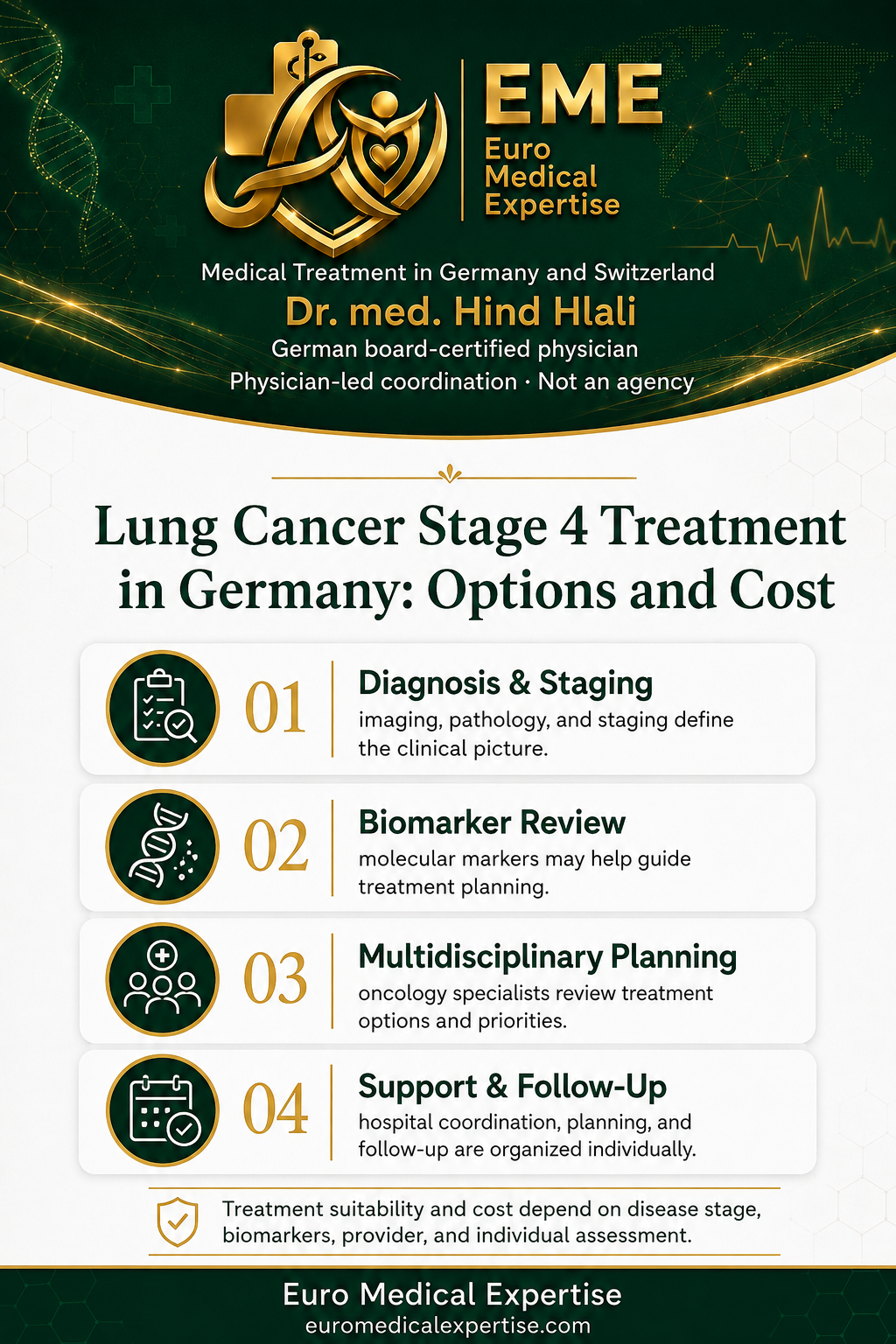
The infographic below summarizes the main medical and planning factors that may shape Stage 4 Lung Cancer Treatment in Germany, including medical evaluation, molecular and imaging review, treatment options, specialist coordination, follow-up and cost considerations.
| No. | Treatment / Service | Indicative Cost / Approach | What It May Include |
|---|---|---|---|
| 1 | Oncological diagnostic work-up without PET/CT | From approximately €6,000* | Published preliminary international-patient oncology work-up price at University Medical Center Freiburg; additional tests can change the final cost. |
| 2 | Oncological diagnostic work-up including PET/CT | From approximately €9,000* | Published preliminary international-patient price at University Medical Center Freiburg; the final scope depends on medical need. |
| 3 | Molecular / biomarker testing | Individual estimate | Depends on pathology, tissue availability and the scope of the molecular panel required. |
| 4 | Chemotherapy | Individual hospital estimate | Drug protocol, number of cycles, laboratory monitoring, supportive medication and inpatient/outpatient delivery. |
| 5 | Immunotherapy | Individual hospital estimate | Specific drug, dose, schedule, combination treatment, duration and monitoring. |
| 6 | Targeted therapy | Individual estimate | Depends on actionable alteration, medication, dose and expected treatment duration. |
| 7 | Radiation therapy | Individual estimate | Technique, number of fractions, site treated and planning complexity. |
| 8 | Brain metastasis treatment | Individual estimate | May involve stereotactic radiation, other radiation approaches, neurosurgical assessment or a combination. |
| 9 | Full multimodal Stage 4 lung cancer treatment | Individual hospital estimate required | May combine diagnostics, systemic therapy, radiation, local treatment, hospital stays and repeat imaging over several months. |
*Important: The €6,000 and €9,000 figures refer to published preliminary oncology diagnostic work-up prices for international patients at one German university medical center, not to the full cost of Stage 4 lung cancer treatment. A final treatment estimate depends on the individual case and treating hospital.
For broader information about how German hospital estimates work, see the Medical Treatment in Germany Cost Guide.
Lung Cancer Treatment in Germany for International Patients
International patients can often begin the process remotely. Pathology reports, imaging, molecular testing and previous treatment records are reviewed before travel so the case can be matched with an appropriate specialist or oncology center.
For Stage 4 lung cancer, this remote review is particularly important because treatment decisions may depend on molecular results that are already available or may need to be completed before choosing a treatment strategy.
The usual pathway is medical-file review, specialist or tumor board matching, hospital assessment, cost estimate when available, and only then travel planning if treatment in Germany is medically appropriate.
Stage 4 Lung Cancer Treatment in Germany for Patients from the USA
Patients from the United States may consider a German review when seeking a second opinion, another interpretation of molecular findings, a disease-specific specialist or confirmation that the current treatment plan is appropriate.
A US patient does not necessarily need to transfer all care to Germany. In some cases, the most useful service is a remote second opinion or focused specialist consultation that can be discussed with the existing oncology team at home.
Comparing Germany and the USA should be based on the specific specialist expertise required, treatment availability, timing, cost structure and the patient’s goals rather than assuming one healthcare system is universally superior.
Stage 4 Lung Cancer Treatment in Germany for Gulf and GCC Patients
Patients from Saudi Arabia, the UAE, Qatar, Kuwait, Bahrain and Oman can begin the process by sending their existing medical documentation for review before making travel arrangements.
For lung cancer treatment in Germany for Saudi patients or lung cancer treatment in Germany for UAE patients, useful documents include pathology, recent CT/PET-CT/MRI reports, actual imaging files, molecular testing, PD-L1 results where available, previous chemotherapy or immunotherapy records, and a current medical summary.
Families often need practical information alongside the treatment plan: how long the patient may need to stay, whether repeated treatment visits are likely, when a cost estimate can be issued, and how follow-up will be coordinated after returning home.
Visa and entry requirements vary by nationality and length of stay and should be confirmed through current official channels before travel is finalized.
How to Find the Best Lung Cancer Doctors and Surgeons in Germany — and When Switzerland May Be Considered
Patients often search for the best lung cancer doctors in Germany, best cancer doctors in Germany or best surgeons in Germany. There is no responsible universal ranking that identifies one best doctor for every Stage 4 lung cancer patient.
The more useful approach is to identify a team with experience in the exact lung cancer subtype, metastatic disease, molecular diagnostics, systemic therapy, thoracic oncology, radiation oncology and complex multidisciplinary decision-making.
Surgery is not automatically part of Stage 4 lung cancer treatment, but thoracic surgical expertise may still matter in selected local or oligometastatic situations. When surgery is being considered, disease-specific procedural experience and tumor board discussion matter more than a general hospital ranking.
The same principle applies to searches for the best doctors in Switzerland or best surgeons in Switzerland. Switzerland may be relevant for selected specialist care, but neither Germany nor Switzerland is universally better for every lung cancer case.
Patients comparing both countries can read our Germany vs Switzerland medical treatment comparison to understand how specialist access, treatment setting, cost and individual priorities may differ.
Stage 4 Lung Cancer Treatment in Germany should be planned around the exact histology, molecular profile, metastatic pattern and overall condition of the patient.
Medical Explanation, Patient Support and Family Communication
Stage 4 lung cancer treatment can involve unfamiliar terms, complex biomarker reports and several specialties. Clear medical explanation is important so the patient and family understand why a treatment has been proposed, what information is still missing, what alternatives exist and what the treating team is trying to achieve.
Support during international treatment also includes practical coordination. Families may need help understanding appointment sequences, communicating with different departments, organizing treatment records and planning follow-up after the patient returns home.
The purpose of physician-led support is not to replace the treating oncologist but to help the patient navigate the pathway with clearer medical context and more consistent communication.
Questions about Stage 4 Lung Cancer Treatment in Germany should be answered individually because no single treatment pathway or cost applies to every stage 4 case.
What Medical Documents Should You Send?
- Pathology report confirming NSCLC, SCLC or another lung cancer subtype.
- Recent CT, PET/CT and MRI reports.
- Actual imaging files where possible.
- Molecular/genomic testing results.
- PD-L1 report where available.
- Previous chemotherapy, immunotherapy or targeted therapy details.
- Radiation treatment summaries.
- Surgery reports if surgery has already been performed.
- Recent laboratory results.
- Current medication list and recent physician summary.
Travel planning for Stage 4 Lung Cancer Treatment in Germany is best organized after a center has reviewed the medical file and confirmed the next clinical step.
A Realistic Timeline for International Lung Cancer Patients
The timing depends on urgency, completeness of the records, whether molecular testing is already available and how quickly the receiving center can assess the case.
A complete medical file can often be reviewed more efficiently than a fragmented one. If important pathology or biomarker information is missing, additional testing may be recommended before a final treatment strategy can be established.
Exact appointment dates and treatment-start dates should only be considered confirmed once the treating center has reviewed the case and provided formal scheduling.
Specialist-center selection for Stage 4 Lung Cancer Treatment in Germany should reflect the patient’s specific lung cancer subtype and the expertise required.
How Coordination Works
During Stage 4 Lung Cancer Treatment in Germany, response assessment helps the oncology team decide whether the current therapy should continue or be changed.
Why Physician-Led Matters
Unlike simple booking agencies, Euro Medical Expertise provides physician-led medical coordination for patients seeking Stage 4 Lung Cancer Treatment in Germany, including medical file review, tumor board coordination and specialist matching based on the actual diagnosis.
Learn more about professional medical coordination by a medical specialist in Germany and about Dr. Hind.
The aim is to bring medical structure to a complex decision: understanding what the pathology means, whether the biomarker profile is complete, what specialist expertise is needed and which next steps are reasonable before the patient commits to travel or treatment.
A second opinion about Stage 4 Lung Cancer Treatment in Germany may help clarify whether additional molecular testing or another treatment strategy should be considered.
Related Specialties and Coordination Services
- Expert Second Opinion: Additional specialist review before starting or changing treatment.
- Oncology and Multidisciplinary Tumor Board: Structured multidisciplinary discussion for complex cancer cases.
- Complex Neurosurgery and Academic Neurology: Relevant for selected patients with brain metastases requiring neurosurgical input.
- Professional Medical Coordination in Germany: Physician-led specialist and hospital matching.
- Medical Treatment in Germany Cost Guide: How estimates and international self-pay costs are determined.
- Germany vs Switzerland Medical Treatment Comparison: A broader comparison for international patients choosing between both countries.
- About Dr. Hind: Background and physician-led coordination approach.
- Best Doctors and Surgeons in Germany: Guidance on choosing specialists and surgeons according to diagnosis and subspecialty.
- Best Doctors and Surgeons in Switzerland: Specialist and surgeon selection for international patients considering care in Switzerland.
Costs for Stage 4 Lung Cancer Treatment in Germany vary according to diagnostic work-up, medicines, radiation, procedures and the duration of care.
Considering Stage 4 Lung Cancer Treatment in Germany?
Send the available pathology, imaging, molecular results and treatment history for physician-led review before specialist and hospital coordination.
WhatsApp Dr. HindSend Your Medical CaseA multidisciplinary review can be particularly valuable when considering Stage 4 Lung Cancer Treatment in Germany because several specialties may contribute to treatment sequencing.
Diagnostic Review Before Stage 4 Lung Cancer Treatment
Before a treatment pathway is selected, the diagnosis should be reviewed in enough detail to answer several separate questions: what histologic type of lung cancer is present, where the disease has spread, whether the available tissue sample is adequate for molecular testing, what treatments have already been given, and whether the patient is medically fit for the proposed therapy. In international cases, these details may be distributed across pathology reports, radiology reports, discharge letters and laboratory results from different hospitals. Bringing them together into one coherent medical summary can make the specialist review more efficient.
For non-small cell lung cancer, treatment planning is increasingly linked to pathology subtype and molecular findings. For small cell lung cancer, the treatment sequence and the role of systemic therapy differ. Imaging may include CT, MRI and, when clinically appropriate, PET/CT or brain imaging. The exact investigations required are determined by the treating team. Repeating every test after arrival in Germany is not automatically necessary; the German center may accept recent, technically adequate studies and request only the investigations needed to clarify unanswered questions.
Pathology review can be particularly important when the original tissue sample was small, the diagnosis is unusual, or molecular testing was incomplete. If tissue is insufficient, the oncology team may discuss whether another biopsy or a blood-based test is appropriate. These decisions should be individualized because a new invasive procedure has to provide enough potential clinical value to justify its burden and risk.
The choice of systemic therapy during Stage 4 Lung Cancer Treatment in Germany depends on tumor biology, biomarker results and treatments already received.
Molecular Testing and Personalized Lung Cancer Treatment
One of the most important changes in advanced lung cancer care is the move from treating all tumors with the same systemic approach toward treatment based on the biology of the individual tumor. In appropriate non-small cell lung cancer cases, the oncology team may review actionable molecular alterations and immune-related markers before selecting first-line treatment. The exact panel depends on histology, clinical context, previous testing and current guideline recommendations.
This is why a patient who has been told simply that chemotherapy is required may benefit from a structured review before beginning treatment, particularly if comprehensive molecular testing has not yet been completed. A detected actionable alteration can change the treatment sequence substantially. Conversely, the absence of a target does not mean that no active treatment exists; chemotherapy, immunotherapy, combined regimens, radiation and supportive interventions may still be appropriate depending on the case.
Molecular results also need interpretation. A laboratory report can list multiple genetic changes, but not every alteration has an approved therapy or proven relevance for that particular cancer. The practical question is not merely whether a mutation exists, but whether it is clinically actionable in the patient’s disease and treatment setting. This is where specialist oncology review and, in difficult cases, a molecular tumor board can add value.
For international patients, Stage 4 Lung Cancer Treatment in Germany can begin with remote review of pathology, imaging and previous treatment records before travel.
Immunotherapy, Targeted Therapy and Chemotherapy
Immunotherapy for lung cancer can be an important option in selected patients, either alone or in combination with chemotherapy. Eligibility and expected benefit depend on the cancer subtype, biomarker profile, previous treatment and the patient’s overall medical condition. Immune-related adverse effects are different from conventional chemotherapy toxicities and may involve organs such as the skin, bowel, lungs, liver or endocrine system. Patients therefore need a treatment team that can recognize and manage these complications promptly.
Targeted therapy for lung cancer is designed to interfere with specific molecular drivers identified in the tumor. When a clinically relevant target is present, oral targeted medicines may sometimes be preferred over conventional chemotherapy in the appropriate treatment line. Resistance can eventually develop, and repeat molecular assessment may then be considered to understand whether a new treatment target has emerged.
Chemotherapy remains a major component of stage 4 lung cancer care. It may be used alone, combined with immunotherapy, or introduced after another treatment stops controlling the disease. The exact drugs, number of cycles and interval between cycles depend on histology, treatment goals, kidney and liver function, blood counts, previous therapy and tolerance. A German hospital estimate should therefore be read as an individualized financial plan rather than a universal price for “lung cancer treatment.”
Stage 4 Lung Cancer Treatment in Germany should be planned around the exact histology, molecular profile, metastatic pattern and overall condition of the patient.
Radiation Therapy and Local Treatment of Metastases
Radiation therapy can serve several different purposes in metastatic lung cancer. It may be used to relieve pain, control bleeding, reduce pressure caused by a tumor, treat selected brain or bone metastases, or consolidate treatment at limited sites of disease in carefully selected patients. Modern radiation techniques allow treatment teams to shape the radiation dose around the target while limiting exposure to surrounding tissue, but the technique chosen depends on the location, size and number of lesions.
When brain metastases are present, the treatment plan may involve radiation oncology, neurosurgery and medical oncology. The decision between stereotactic radiation, broader-field radiation, surgery or systemic treatment depends on the number and size of lesions, symptoms, molecular subtype, extracranial disease control and the patient’s condition. For selected cases requiring neurological or surgical review, patients can also read our complex neurosurgery and academic neurology coordination page.
Questions about Stage 4 Lung Cancer Treatment in Germany should be answered individually because no single treatment pathway or cost applies to every stage 4 case.
First-Line, Second-Line and Later Treatment Decisions
Stage 4 lung cancer treatment is often a sequence rather than a single intervention. First-line treatment is selected from the information available at diagnosis. The patient is then monitored clinically and with imaging at intervals determined by the treating team. If the disease remains controlled and side effects are acceptable, treatment may continue according to the protocol. If the cancer progresses or toxicity becomes unacceptable, the next decision depends on what was used previously and what new information is available.
A second-line plan may involve another systemic therapy, a targeted drug when an actionable alteration is identified, radiation to a progressing site, a clinical trial, or a supportive-care-focused strategy when the expected burden of further treatment outweighs the likely benefit. Later-line decisions become increasingly individualized. A second opinion can be useful at these transition points because the key question is often not whether another drug exists, but whether that drug is likely to provide meaningful benefit for this particular patient.
Travel planning for Stage 4 Lung Cancer Treatment in Germany is best organized after a center has reviewed the medical file and confirmed the next clinical step.
Monitoring Response and Reassessing the Plan
Treatment does not end with the first prescription. The oncology team monitors symptoms, laboratory values, treatment toxicity and imaging findings to determine whether the disease is responding, stable or progressing. A scan result should be interpreted together with the clinical picture; a single measurement is rarely the entire story. New symptoms may require earlier imaging or additional investigations, while stable patients may follow the planned reassessment schedule.
International patients should ask in advance which parts of follow-up can safely be completed in their home country and which require return to Germany. Some patients may receive a treatment recommendation in Germany and continue part of the therapy locally under the supervision of their home oncologist, while others may need repeated treatment at the German center. This depends on the medication, monitoring requirements, local availability and the treating hospital’s recommendations.
Specialist-center selection for Stage 4 Lung Cancer Treatment in Germany should reflect the patient’s specific lung cancer subtype and the expertise required.
What Changes the Cost of Stage 4 Lung Cancer Treatment in Germany?
The total cost can differ substantially even between two patients with the same diagnosis. The main cost drivers include the diagnostic workup required before treatment, pathology and molecular testing, the systemic drugs selected, the number of treatment cycles, radiation technique and number of sessions, inpatient versus outpatient care, management of complications, and whether surgery or an invasive procedure is required. Newer targeted and immune therapies can be major cost components, particularly when treatment continues over many months.
For international self-paying patients, the hospital generally prepares an estimate after reviewing the medical records. The estimate may require advance payment before admission or treatment begins. Patients should distinguish between the hospital’s medical charges and separate travel-related expenses such as flights, accommodation, local transportation, translation or accompanying-family costs. Euro Medical Expertise coordinates the medical pathway but does not replace the hospital’s official financial quotation.
| Cost Component | What Can Increase Cost? | Planning Point |
|---|---|---|
| Diagnostic review | Additional imaging, pathology review or repeat biopsy | Send complete recent records first |
| Molecular testing | Broader genomic panels or additional tissue analysis | Confirm what has already been tested |
| Systemic therapy | Drug choice, combination therapy and duration | Ask whether the estimate covers one cycle or a full planned course |
| Radiation therapy | Technique, target number and treatment sessions | A radiation plan is needed for a meaningful quote |
| Hospital stay | Complications, procedures and length of admission | Keep a contingency budget for unplanned care |
During Stage 4 Lung Cancer Treatment in Germany, response assessment helps the oncology team decide whether the current therapy should continue or be changed.
Lung Cancer Treatment in Germany for Gulf and GCC Patients
Patients from Saudi Arabia, the UAE, Qatar, Kuwait, Bahrain and Oman often contact German centers after receiving a diagnosis locally and want an independent review before committing to a treatment sequence. The most efficient first step is usually remote medical review rather than immediate travel. This allows the receiving team to identify missing pathology, imaging or molecular information and determine whether travel to Germany is medically useful.
For GCC families, coordination may also include Arabic-language communication, hospital correspondence, appointment planning and guidance on the documents requested for medical travel. Visa requirements depend on nationality and current rules, so they should be checked with the responsible official authorities before travel. When the patient is medically unstable, travel fitness should be discussed with the treating physician before flights are booked.
Family members frequently ask whether they should move the entire treatment course to Germany. There is no single answer. In some cases, the value of Germany is the specialist review, pathology confirmation and treatment strategy, while routine cycles can potentially continue closer to home. In other cases, the proposed treatment, procedure or monitoring requires the patient to remain near the German center. The treating oncology team should define this before long-term accommodation is arranged.
A second opinion about Stage 4 Lung Cancer Treatment in Germany may help clarify whether additional molecular testing or another treatment strategy should be considered.
Lung Cancer Treatment in Germany for Patients from the USA
US patients may seek care in Germany for a second opinion, access to a specific specialist team, review of a difficult molecular profile, or comparison of treatment strategies. The clinical review process remains the same: diagnosis confirmation, staging, molecular information, previous therapy and current performance status are assessed before a recommendation is made. Patients should not assume that a treatment available in Germany is automatically superior to one available in the United States; the value lies in whether the German review identifies a clinically meaningful alternative for the individual case.
US insurance coverage for planned treatment abroad varies considerably. Patients should obtain written clarification from their insurer rather than assuming reimbursement. Self-paying patients generally need a hospital estimate and may be asked for advance payment. Travel planning should also account for the possibility that systemic treatment requires multiple visits or a prolonged stay.
Costs for Stage 4 Lung Cancer Treatment in Germany vary according to diagnostic work-up, medicines, radiation, procedures and the duration of care.
Germany vs Switzerland for Advanced Lung Cancer Care
Germany and Switzerland both have highly developed medical systems, but the right destination depends on the specific clinical need rather than a general country ranking. Germany offers a broad network of university hospitals, certified cancer centers and multidisciplinary oncology programs. Switzerland also has university and specialist centers with strong oncology expertise. For a patient with stage 4 lung cancer, the more useful comparison is which center has the appropriate thoracic oncology expertise, molecular diagnostics, radiation capability and access to the relevant treatment pathway.
Patients comparing the two countries can read our Germany vs Switzerland medical treatment comparison. The decision should consider medical suitability, expected treatment duration, travel burden, language needs, financial estimate and whether follow-up can be coordinated with the patient’s home oncologist.
A multidisciplinary review can be particularly valuable when considering Stage 4 Lung Cancer Treatment in Germany because several specialties may contribute to treatment sequencing.
How to Find the Best Doctors and Surgeons in Germany or Switzerland
Patients often search for the “best doctors in Germany,” “best surgeons in Germany,” “best doctors in Switzerland,” or “best surgeons in Switzerland.” For stage 4 lung cancer, a famous name alone is not enough. The relevant specialist depends on the exact problem: thoracic medical oncology for systemic treatment, thoracic surgery when resection is genuinely being considered, radiation oncology for local treatment, interventional pulmonology for diagnostic or airway procedures, and neurosurgery or neuro-oncology when the brain is involved.
A better selection process looks at documented disease-specific experience, the multidisciplinary team surrounding the physician, access to molecular pathology, the center’s ability to manage complications, and whether the proposed specialist is actually relevant to the patient’s current treatment decision. Physician-led coordination helps avoid sending a complex metastatic case to a specialist whose expertise is excellent but not aligned with the immediate clinical question.
The choice of systemic therapy during Stage 4 Lung Cancer Treatment in Germany depends on tumor biology, biomarker results and treatments already received.
Medical Explanation and Family Support
Advanced lung cancer produces a large amount of technical information in a short period of time. Patients may receive pathology terminology, molecular results, staging language and several treatment options at once. Medical explanation is therefore part of good coordination. The aim is to translate the specialist recommendation into understandable decisions: what the treatment is intended to achieve, why it was chosen, what alternatives were considered, what monitoring is required and what would trigger a change in strategy.
Family support is also important because relatives often manage documents, travel and communication while the patient is coping with symptoms and treatment. A clear point of contact reduces duplicated communication and helps the family understand which questions belong to the German center and which should be addressed by the treating team at home.
For international patients, Stage 4 Lung Cancer Treatment in Germany can begin with remote review of pathology, imaging and previous treatment records before travel.
Questions to Clarify Before Traveling to Germany
- Has the pathology diagnosis been confirmed, and is the tissue adequate for molecular testing?
- Which molecular and immune biomarkers have already been tested, and are any important results still missing?
- What is the exact purpose of the German consultation: second opinion, treatment initiation, surgery, radiation, or full-course oncology care?
- Which existing scans can the center review, and which investigations may need to be repeated?
- Is the proposed treatment expected to be inpatient or outpatient?
- How long should the patient plan to remain in Germany for the first treatment phase?
- Can subsequent cycles or follow-up imaging be performed in the home country?
- What does the hospital estimate include, and what possible additional costs are excluded?
- Who should be contacted if symptoms worsen before travel or between treatment visits?
Stage 4 Lung Cancer Treatment in Germany should be planned around the exact histology, molecular profile, metastatic pattern and overall condition of the patient.
More Questions from International Patients
Can stage 4 lung cancer be cured?
Stage 4 lung cancer is generally treated as metastatic disease, with treatment commonly focused on controlling the cancer, extending survival where possible and preserving quality of life. A small number of highly selected patients with limited metastatic disease may be considered for intensive local treatment, but this requires multidisciplinary assessment and should not be generalized to all stage 4 cases.
Do I need molecular testing before traveling to Germany?
If testing is available locally, sending existing results can save time. If testing is incomplete or the tissue needs review, the German oncology team can advise what additional analysis is clinically useful before a final treatment plan is selected.
Can I receive a second opinion without traveling?
In many cases, an initial specialist review can begin remotely using medical reports, imaging and pathology information. Whether an in-person visit is required depends on the question being asked and the center’s process.
Can treatment continue in my home country after a German second opinion?
Sometimes yes. If the recommended medicines and monitoring are available locally, the German recommendation may be shared with the home oncology team. The treating physicians should agree on responsibility for prescriptions, monitoring and management of side effects.
Is Germany better than Switzerland for stage 4 lung cancer?
Neither country is automatically better for every case. The relevant question is which center and specialist team best match the patient’s exact diagnosis, molecular profile and treatment need, together with practical considerations such as cost and travel.
How do I choose a lung cancer doctor in Germany?
Look for disease-specific thoracic oncology expertise, multidisciplinary collaboration, access to molecular diagnostics and a treatment pathway appropriate to the patient’s current stage and previous therapy rather than relying only on general reputation.
Questions about Stage 4 Lung Cancer Treatment in Germany should be answered individually because no single treatment pathway or cost applies to every stage 4 case.
For people traveling from abroad, Stage 4 Lung Cancer Treatment in Germany works best when the medical plan and international logistics are coordinated before treatment begins.
Planning a Complete International Treatment Pathway
For a patient traveling with stage 4 lung cancer, the medical plan and the travel plan should be built together. A recommendation that is medically reasonable may become difficult to follow if the patient has to fly repeatedly, remain abroad without family support, or arrange urgent care in two countries. Before treatment begins, it is useful to clarify which hospital will be responsible for prescribing therapy, which team will monitor laboratory results, where emergency complications should be treated, and how imaging will be shared between the German center and the home oncologist.
The first visit may be primarily diagnostic, or it may include treatment if the plan is already clear. Patients should therefore avoid booking a very short return trip before the center confirms the expected schedule. Some investigations can be completed quickly, while pathology review, additional molecular testing or multidisciplinary discussion may require more time. A realistic itinerary reduces stress and avoids unnecessary changes to flights and accommodation.
Medication planning also matters. Patients should bring an accurate list of current medicines, including anticoagulants, pain medicines, supplements and drugs used for other chronic conditions. The German team needs this information to assess interactions and procedural risks. Patients should not stop prescribed medication simply because they are traveling unless their treating physician has advised them to do so.
Travel planning for Stage 4 Lung Cancer Treatment in Germany is best organized after a center has reviewed the medical file and confirmed the next clinical step.
Supportive care during Stage 4 Lung Cancer Treatment in Germany may include nutritional assessment, symptom management and rehabilitation when clinically appropriate.
Nutrition, Rehabilitation and Maintaining Function
Weight loss, fatigue, reduced appetite and loss of muscle strength are common concerns in advanced lung cancer. These problems can affect treatment tolerance and daily independence. Nutritional assessment and appropriate physical activity or rehabilitation may therefore be included in supportive care when clinically suitable. The goal is not to replace cancer treatment with diet or exercise, but to help the patient maintain strength and function during therapy.
Families should be cautious about restrictive diets or unproven supplements promoted as cancer cures. Supplements can interact with systemic therapies or affect bleeding and liver function. Any complementary product should be discussed with the oncology team. A practical nutritional plan is usually individualized around symptoms such as nausea, swallowing difficulty, taste changes or reduced appetite.
Specialist-center selection for Stage 4 Lung Cancer Treatment in Germany should reflect the patient’s specific lung cancer subtype and the expertise required.
When the disease has spread to the brain or bone, planning Stage 4 Lung Cancer Treatment in Germany also requires attention to symptoms, local treatment options and neurological or orthopedic risks.
Brain, Bone and Other Metastatic Sites
Brain metastases can change both urgency and treatment sequencing. New weakness, seizures, severe headache, confusion or other neurological symptoms require prompt medical assessment. Depending on the clinical picture, management may involve medication for symptoms, stereotactic radiation, surgery, systemic treatment or a combination. The presence of brain metastases does not by itself define one universal treatment pathway.
Bone metastases can cause pain and, in some locations, increase the risk of fracture or spinal instability. Radiation, bone-directed medicines, orthopedic or spinal procedures and systemic therapy may all be considered. Severe new back pain associated with weakness, numbness or bladder or bowel changes is an emergency and should be assessed immediately rather than waiting for an international appointment.
Other metastatic sites, such as the liver, adrenal glands or pleura, create different treatment questions. The tumor board evaluates whether these sites should be managed primarily through systemic therapy or whether a local intervention could provide symptom control or meaningful disease control in a selected situation.
During Stage 4 Lung Cancer Treatment in Germany, response assessment helps the oncology team decide whether the current therapy should continue or be changed.
When choosing a hospital for Stage 4 Lung Cancer Treatment in Germany, patients should consider multidisciplinary expertise, molecular diagnostics, complication management and continuity of follow-up.
Quality and Safety Questions to Ask a Cancer Center
International patients often focus first on the name of a doctor, but the quality of the surrounding system is equally important. Ask whether the case is reviewed by a multidisciplinary thoracic oncology team, whether pathology and molecular diagnostics are available, how treatment complications are managed, and whether the center can coordinate radiation, surgery or neurological care when needed. Continuity matters especially when treatment extends over several months.
It is also reasonable to ask how results will be communicated, whether reports can be provided in a language the patient understands, and who will answer urgent questions between appointments. A technically advanced treatment is only useful when monitoring and follow-up are organized safely.
A second opinion about Stage 4 Lung Cancer Treatment in Germany may help clarify whether additional molecular testing or another treatment strategy should be considered.
Realistic expectations are an essential part of Stage 4 Lung Cancer Treatment in Germany, because treatment response and duration vary significantly between individual patients.
Setting Realistic Expectations
International treatment should never be presented as a guarantee of cure. The purpose of specialist review is to identify the most appropriate evidence-based options for the individual case and to clarify what benefit can reasonably be expected. In metastatic lung cancer, treatment response varies. Some patients experience substantial and durable control, while others have disease that progresses despite appropriate therapy.
Realistic communication includes discussing uncertainty. Imaging can show how the cancer behaves over time, but no physician can predict an exact individual outcome from stage alone. Patients should be wary of services that promise guaranteed success, claim that one treatment works for every cancer, or pressure families to pay before a qualified medical review has taken place.
Costs for Stage 4 Lung Cancer Treatment in Germany vary according to diagnostic work-up, medicines, radiation, procedures and the duration of care.
A structured review of Stage 4 Lung Cancer Treatment in Germany should explain the recommended pathway, alternatives, expected monitoring and the reasons behind the treatment sequence.
What a Useful Case Review Should Answer
By the end of a structured stage 4 lung cancer review, the patient should ideally understand the confirmed diagnosis, the extent of disease, which molecular findings are clinically relevant, the treatment goal, the recommended first or next treatment, reasonable alternatives, major expected side effects, the monitoring plan and the circumstances that would trigger a change in treatment. If these questions remain unclear, asking for a written summary can be helpful.
For patients comparing several hospitals, this framework also makes comparisons more meaningful. Instead of comparing marketing claims, compare whether each recommendation addresses the same diagnosis and treatment goal, whether the molecular data have been considered, and whether the practical pathway is feasible. The most useful plan is one that is both medically appropriate and realistically deliverable.
A multidisciplinary review can be particularly valuable when considering Stage 4 Lung Cancer Treatment in Germany because several specialties may contribute to treatment sequencing.
What to Expect During the First Oncology Visit in Germany
The first specialist visit is usually more useful when the medical records have been reviewed in advance. The oncologist may confirm the diagnosis and stage, review the patient’s symptoms and general condition, examine previous treatment, and identify any missing molecular or imaging information. The visit may end with a treatment recommendation, but in complex cases the final plan may depend on pathology review, additional testing or discussion at a multidisciplinary tumor board.
Patients should bring a written list of questions. Useful topics include the goal of treatment, why one regimen is preferred over another, whether a targetable molecular alteration is present, what side effects are most important, how soon response will be assessed, and what options remain if the first proposed treatment does not work. International patients should also ask whether treatment can be divided between Germany and their home country.
If the recommendation changes after new pathology or molecular results, that does not necessarily mean the original review was incorrect. Modern lung cancer treatment is data-dependent, and new information can legitimately alter the preferred sequence. This is why completing the relevant diagnostic workup before committing to a long treatment course is often valuable.
The choice of systemic therapy during Stage 4 Lung Cancer Treatment in Germany depends on tumor biology, biomarker results and treatments already received.
Common Search Questions About Stage 4 Lung Cancer Treatment in Germany
Patients searching for Stage 4 Lung Cancer Treatment in Germany often ask whether Germany offers immunotherapy, targeted therapy, advanced radiation, molecular testing and multidisciplinary review. These options are part of modern oncology care, but availability does not mean every option is suitable for every patient. The treatment choice must follow the tumor’s histology, biomarkers, previous therapy and the patient’s condition.
Another common question is whether a German doctor can recommend treatment without seeing the patient. A remote review can often clarify the medical file and identify reasonable next steps, but some decisions require physical examination, new imaging, pathology confirmation or direct assessment by the treating team. The safest approach is to use remote review as the first stage of coordination and then travel when the clinical purpose of the visit is clear.
Patients also ask whether a higher treatment cost means better care. Cost alone is not a measure of quality. An expensive drug may be highly appropriate for one molecular profile and inappropriate for another. The priority is to establish the correct diagnosis and treatment indication first, then obtain a transparent hospital estimate for the recommended pathway.
For international patients, Stage 4 Lung Cancer Treatment in Germany can begin with remote review of pathology, imaging and previous treatment records before travel.
Frequently Asked Questions About Stage 4 Lung Cancer Treatment in Germany
What treatment options exist for Stage 4 lung cancer in Germany?
Options may include chemotherapy, immunotherapy, targeted therapy, radiation therapy and selected local treatments. The treatment depends on NSCLC versus SCLC, molecular findings, PD-L1 status where relevant, metastatic sites, previous therapy and the patient’s general condition.
How much does Stage 4 Lung Cancer Treatment in Germany cost?
There is no single fixed price. Costs depend on diagnostics, molecular testing, systemic medication, treatment duration, radiation, hospital care and procedures. A meaningful estimate requires medical file review and an individual treatment plan.
Is immunotherapy used for Stage 4 lung cancer?
Yes, immunotherapy is used in selected patients. Suitability depends on lung cancer subtype, molecular profile, PD-L1 and other clinical factors. It may be used alone or combined with chemotherapy depending on the case.
What molecular tests are important for advanced lung cancer?
For advanced NSCLC, testing may include actionable alterations such as EGFR, ALK, ROS1, BRAF, MET, RET, NTRK, HER2 and KRAS in appropriate cases, alongside PD-L1 testing. The exact panel depends on pathology and current guideline-based practice.
Is targeted therapy better than chemotherapy for Stage 4 lung cancer?
Not for every patient. Targeted therapy is relevant when the tumor carries a specific actionable molecular alteration. Treatment selection should be based on the pathology and molecular profile rather than assuming one treatment is universally superior.
Can Stage 4 lung cancer with brain metastases be treated in Germany?
Yes, treatment may involve systemic therapy, stereotactic or other radiation approaches and, in selected cases, neurosurgical assessment. The appropriate strategy depends on the number, size and location of brain metastases and the overall disease situation.
Should I get a second opinion before starting Stage 4 lung cancer treatment?
A second opinion can be useful when treatment recommendations differ, molecular findings are complex, the disease has progressed after treatment or a major change in therapy is being considered.
Can international patients start with a remote medical review?
Yes. Medical file review can often begin remotely using pathology, imaging, molecular results and prior treatment history before a travel decision is made.
What documents are needed for a Stage 4 lung cancer review?
Typically pathology, recent CT/PET-CT/MRI imaging, actual image files where possible, molecular testing, PD-L1 results if available, previous treatment records and a recent medical summary.
Can US patients receive Stage 4 lung cancer treatment in Germany?
US patients can submit their medical files for specialist assessment, second opinion or treatment evaluation. Whether treatment in Germany is appropriate depends on the individual case and receiving center’s assessment.
Why would a US patient seek a lung cancer second opinion in Germany?
Reasons may include confirming a treatment plan, obtaining another interpretation of molecular findings, consulting a disease-specific specialist or evaluating another medically reasonable treatment strategy.
Can Saudi patients receive Stage 4 lung cancer treatment in Germany?
Saudi patients can begin by submitting their existing medical documentation for review. If an appropriate pathway is identified, specialist matching, hospital assessment, cost estimation and travel coordination can follow.
Can UAE patients receive lung cancer treatment in Germany?
Yes, UAE patients can submit their medical records remotely for assessment before deciding whether a consultation, second opinion or treatment pathway in Germany is appropriate.
Can patients from Qatar or Kuwait seek Stage 4 lung cancer treatment in Germany?
Yes. Cases can be submitted for medical assessment. Treatment recommendations and hospital acceptance depend on the individual diagnosis, current condition and available treatment pathway.
Can patients from Bahrain or Oman seek lung cancer treatment in Germany?
Patients from Bahrain and Oman can also begin with remote medical file review before specialist, hospital and travel coordination.
How much does Stage 4 lung cancer treatment in Germany cost for Gulf patients?
The treatment cost is determined by the medical plan rather than nationality. Diagnostics, molecular testing, medication, radiation, procedures and duration all influence the final estimate.
Do German hospitals require international self-paying patients to pay in advance?
International self-paying treatment may involve a formal estimate and advance payment before planned treatment or admission, depending on the hospital and treatment arrangement.
How can I find the best lung cancer doctor in Germany?
Rather than relying only on general rankings, look for disease-specific thoracic oncology experience, expertise in metastatic lung cancer, molecular diagnostics, tumor board access and relevant treatment resources.
How can I find the best lung cancer surgeon in Germany?
When surgery is actually indicated, relevant factors include thoracic surgical experience, case volume, multidisciplinary review, hospital resources and experience with complex lung cancer procedures.
Germany or Switzerland: which is better for lung cancer treatment?
Neither country is universally better for every patient. The appropriate choice depends on the exact diagnosis, required specialist expertise, treatment availability, timing, cost and the patient’s individual priorities.
Who makes the final treatment decision?
The treating oncology team or multidisciplinary tumor board makes the final treatment decision based on the complete medical file, pathology, imaging, molecular profile and the patient’s clinical condition.
Stage 4 Lung Cancer Treatment in Germany should be planned around the exact histology, molecular profile, metastatic pattern and overall condition of the patient.
Scientific and Official Sources
- AWMF / Leitlinienprogramm Onkologie: German evidence-based oncology guidelines.
- German Cancer Research Center (DKFZ) / Krebsinformationsdienst.
- European Society for Medical Oncology (ESMO): lung cancer clinical practice guidelines.
- National Comprehensive Cancer Network (NCCN): lung cancer guideline framework.
- University Medical Center Freiburg International Medical Services: published international-patient oncology diagnostic cost information.
This article is for informational purposes only and does not constitute medical advice. Stage 4 lung cancer treatment options, eligibility, treatment costs and expected outcomes depend on the individual diagnosis, pathology, molecular profile, metastatic pattern, previous treatment, current health status and treating medical team’s assessment. Always consult a qualified medical professional before making healthcare decisions.
All rights reserved. This content may not be copied or reproduced without prior written permission from Dr. med. Hind Hlali and Euro Medical Expertise.




Leave a Reply