
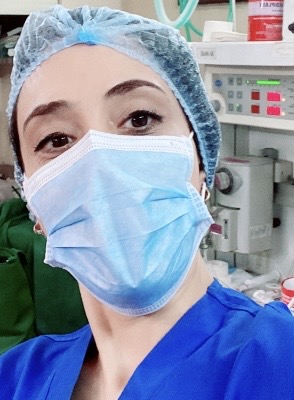
Written by Dr. med. Hind Hlali
German board-certified specialist physician. Physician-led medical coordination. Not a booking agency.
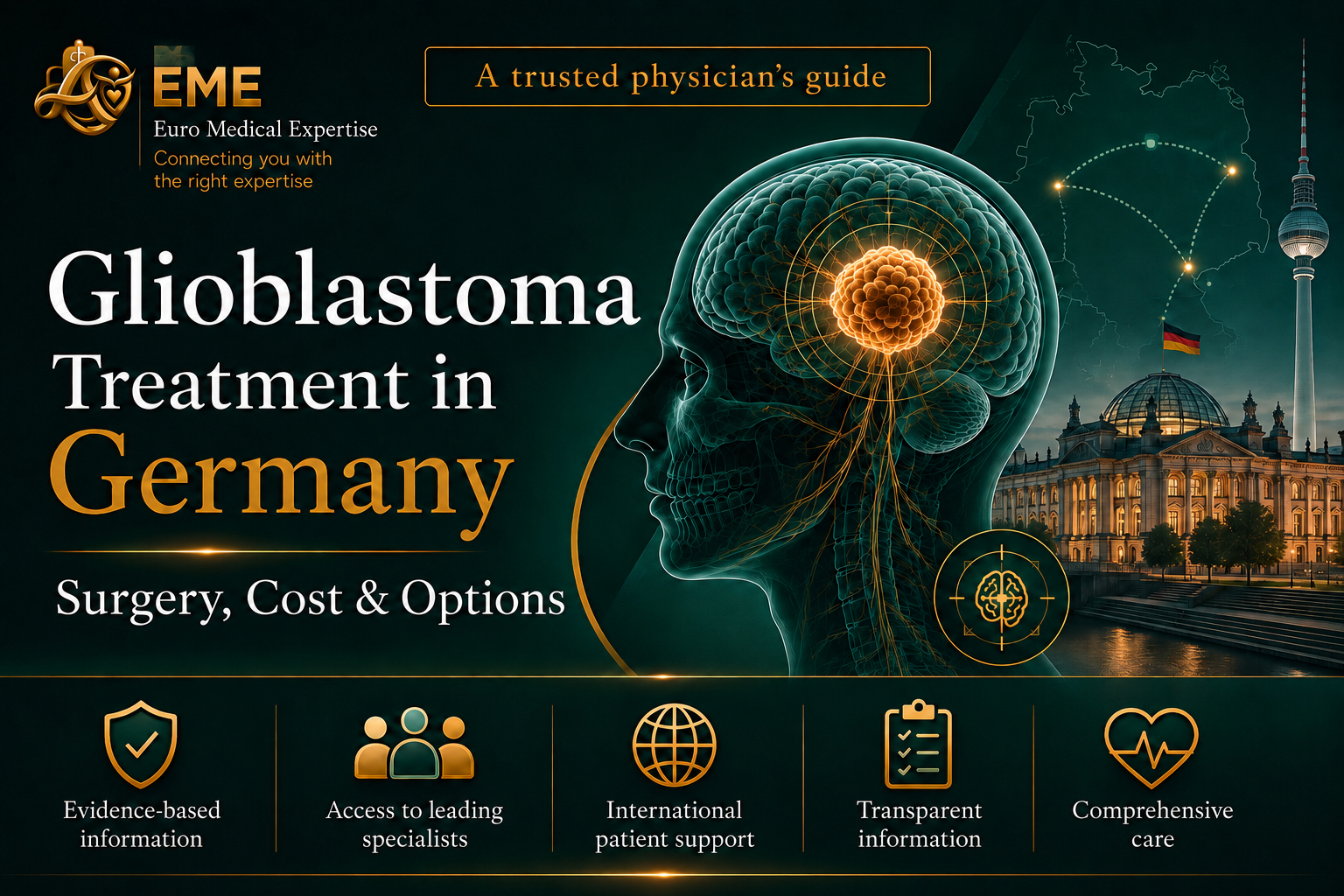
Glioblastoma Treatment in Germany: Options and Cost
Physician-led coordination for glioblastoma treatment in Germany, including neurosurgery, neuro-oncology, immunotherapy assessment and hospital cost planning.
Table of Contents
- Who This Service Is For
- Glioblastoma Treatment in Germany
- Diagnosis and Molecular Testing
- Glioblastoma Surgery in Germany
- Immunotherapy for Glioblastoma
- Radiotherapy and Chemotherapy
- Recurrent Glioblastoma Treatment
- Glioblastoma Treatment Cost in Germany
- Second Opinion
- How Coordination Works
- Why Physician-Led Matters
- Frequently Asked Questions
- Scientific and Official Sources
Glioblastoma treatment in Germany requires close coordination between neurosurgery, radiation oncology and neuro-oncology from the very first review. As a German-licensed, board-certified specialist physician who trained and practiced inside the German hospital system, I review each case personally, including its molecular and biomarker profile, before matching it with the right academic center, rather than presenting a general list of clinics.
For international patients researching GBM treatment in Germany, choosing a hospital based only on general reputation is rarely enough. Tumor location, previous treatment, pathology, MGMT promoter methylation, IDH status, imaging findings and neurological condition can all influence which specialist team and treatment pathway are appropriate.
Immunotherapy in Germany is considered for a growing range of cancer types, including melanoma, lung cancer and selected blood cancers. For glioblastoma specifically, immunotherapy remains an area of continuing research and selected clinical consideration.
This page focuses on glioblastoma treatment in Germany, including surgery, molecular diagnostics, radiation therapy, chemotherapy, recurrence treatment, cost planning and glioblastoma immunotherapy in Germany. Immunotherapy is not appropriate for every glioblastoma case; suitability depends on the tumor’s molecular profile, prior treatment and a proper tumor board review .
Who This Service Is For
- Patients with a newly diagnosed or recurrent glioblastoma.
- Patients whose treating team has mentioned immunotherapy as a possible option.
- Families wanting to understand the coordination process between neurosurgery and oncology.
- Patients considering brain tumor surgery in Germany.
- International patients requesting a hospital estimate before travelling.
- Patients wanting a second medical opinion before committing to a treatment plan.
Glioblastoma Treatment in Germany: What It Involves
Glioblastoma, sometimes still referred to by its older name glioblastoma multiforme, is one of the most aggressive forms of brain cancer, and brain cancer treatment in Germany for this diagnosis is one of the areas that requires the closest coordination between neurosurgery and oncology.
It develops from glial cells, the supportive cells surrounding neurons in the brain, and is classified by the World Health Organization as a grade 4 tumor, reflecting its aggressive growth pattern and tendency to infiltrate surrounding brain tissue diffusely rather than forming a single clearly bordered mass.
Newly diagnosed glioblastoma treatment in Germany generally begins with confirmation of the tumor classification and assessment of whether maximal safe surgery is possible before oncological treatment is planned.
Standard treatment generally involves maximal safe surgical resection where possible, followed by radiation therapy and chemotherapy, most commonly temozolomide, guided in part by molecular markers such as MGMT promoter methylation status.
This combined approach, often described as the Stupp protocol after the researcher who established it as standard practice, has formed the backbone of glioblastoma treatment for roughly two decades, although research continues to explore ways to improve outcomes.
Because glioblastoma and other forms of brain cancer sit at the intersection of neurosurgery and oncology, cases are generally strongest when reviewed by both a neurosurgical team and a multidisciplinary tumor board together.
The surgical approach alone requires careful judgment: removing as much tumor tissue as safely possible while preserving neurological function depends heavily on the tumor’s exact location and the surgical team’s experience with awake craniotomy and other advanced techniques used to map critical brain regions during surgery.
Diagnosis and Molecular Testing for Glioblastoma
An accurate glioblastoma diagnosis depends on more than imaging alone. While MRI with contrast typically raises initial suspicion, confirming the diagnosis and understanding its specific biological behavior requires tissue analysis, usually obtained either during surgical resection or through a stereotactic biopsy for glioblastoma when surgery is not immediately appropriate.
Pathology review then examines the tissue under the microscope and increasingly relies on molecular diagnostics for glioblastoma to characterize the tumor more precisely.
MGMT promoter methylation status has become one of the most clinically relevant molecular markers in glioblastoma, since tumors with a methylated MGMT promoter tend to respond more favorably to temozolomide chemotherapy.
IDH mutation status is another important marker in modern brain tumor classification, helping distinguish glioblastoma from other diffuse glioma entities that may behave differently.
These findings meaningfully inform prognosis discussions and, in some cases, treatment sequencing decisions made by the treating oncology team.
Surgical Approaches to Glioblastoma
Glioblastoma surgery in Germany aims to achieve what is described as maximal safe resection, meaning the surgical removal of glioblastoma tissue as extensively as possible without causing unacceptable neurological damage.
Because glioblastoma cells often extend microscopically beyond what is visible on imaging, complete removal in the sense of eliminating every cancer cell is generally not achievable through surgery alone, which is why it is followed by radiation and chemotherapy rather than considered curative on its own.
Modern neurosurgical techniques have expanded what is safely achievable during GBM treatment in Germany.
Intraoperative MRI allows surgeons to reassess how much tumor remains during the operation itself rather than relying solely on preoperative imaging.
For tumors located deep within the brain or in locations where open surgery carries higher risk, selected centers may evaluate MRI-guided laser ablation, a minimally invasive technique using a laser probe under imaging guidance.
Fluorescence-guided surgery can help surgeons distinguish tumor tissue from surrounding brain tissue more clearly in suitable cases.
Awake craniotomy, where the patient remains conscious during selected portions of surgery to allow real-time testing of speech and motor function, may be used for tumors located near critical brain regions.
These techniques are part of what advanced neurosurgery in Germany academic centers may offer for complex brain tumor cases.
Immunotherapy for Glioblastoma in Germany
Immunotherapy works by helping the patient’s own immune system recognize and respond to tumor cells. It has meaningfully changed treatment for several cancer types, including melanoma, lung cancer and selected blood cancers.
Whether immunotherapy is suitable for a given patient depends on the specific cancer type, molecular and biomarker profile and any prior treatment received, which is why proper specialist review comes before this option is considered.
For glioblastoma specifically, GBM immunotherapy in Germany remains an active area of research and selected clinical application.
The brain’s unique immune environment has made translating immunotherapy for brain tumors and brain cancer immunotherapy in Germany from other cancer types to glioblastoma more challenging than initially hoped.
Some academic centers also explore more specialized approaches, including dendritic cell therapy for glioblastoma, sometimes described as a dendritic cell vaccine for glioblastoma.
These approaches aim to stimulate immune recognition of tumor-related targets, but availability does not mean that a treatment is suitable or proven for every patient.
Before considering experimental glioblastoma immunotherapy in Germany, patients should understand whether the treatment is part of a clinical trial, what evidence supports it and how it fits with established glioblastoma care.
Radiation and Chemotherapy for Glioblastoma
Following surgery, radiotherapy for glioblastoma in Germany is typically delivered to the area surrounding the original tumor site over several weeks, aiming to treat residual microscopic tumor cells that surgery could not remove.
This is generally combined with concurrent low-dose chemotherapy for glioblastoma in Germany, most often temozolomide, followed by additional cycles of temozolomide alone once radiation is complete.
This combined protocol has become the established standard of care for many patients with newly diagnosed glioblastoma who are well enough to tolerate it.
Recurrent Glioblastoma Treatment in Germany
Recurrent glioblastoma treatment becomes necessary for many patients given the tumor’s aggressive nature, and this second-line glioblastoma therapy stage generally requires more individualized decisions than initial treatment.
Options may include repeat surgery in selected cases, different systemic treatment approaches, participation in clinical trials, re-irradiation in suitable cases or Tumor Treating Fields.
Before changing treatment, specialists may also need to distinguish true recurrence from treatment-related imaging changes such as pseudo-progression.
Why Multidisciplinary Review Matters for Glioblastoma
Perhaps more than almost any other cancer diagnosis, glioblastoma benefits from genuine multidisciplinary discussion before a treatment plan is finalized.
The decisions involved — how aggressively to pursue surgical resection given a tumor’s specific location, which radiation approach and dose to use, when to introduce or adjust chemotherapy, and how to weigh quality of life against aggressive treatment when the disease recurs — require input from neurosurgery, radiation oncology and neuro-oncology working together.
This is precisely the function of a properly constituted tumor board review for brain tumors: a structured discussion where imaging, pathology and the patient’s overall clinical picture are reviewed collectively before a recommendation is made.
For international patients, ensuring that this kind of multidisciplinary review actually takes place is one of the most important elements I coordinate on their behalf.
See our Complex Neurosurgery and Academic Neurology coordination service for the surgical side of this pathway, and our Oncology and Multidisciplinary Tumor Board service for broader oncology review.
Common Misconceptions About Glioblastoma Treatment
Patients and families researching glioblastoma often encounter a mix of accurate information and misleading claims online, and addressing some of the most common misconceptions directly can help set more realistic expectations from the start.
Misconception 1: A more aggressive surgery is always better. While maximal safe resection is generally associated with better outcomes, pursuing resection beyond what is safely achievable can cause neurological damage that significantly reduces quality of life. The word “safe” in maximal safe resection is important.
Misconception 2: If temozolomide has not worked, nothing else can be tried. Recurrent glioblastoma treatment options, while more limited than initial treatment, are not nonexistent. Clinical trials, alternative systemic therapies, repeat surgery in selected cases and other approaches may still be reasonable to discuss.
Misconception 3: Any center that treats brain tumors has equal experience with glioblastoma. Glioblastoma requires coordinated experience across neurosurgery, radiation oncology and neuro-oncology together.
Misconception 4: Experimental treatments found online are worth pursuing regardless of evidence. A properly conducted clinical trial at an academic center is very different from an unregulated treatment offered outside a research framework.
Recovery and Rehabilitation After Glioblastoma Surgery
Recovery following glioblastoma surgery varies considerably depending on the tumor’s location, extent of resection and whether neurological deficits occurred during or as a result of surgery.
Some patients recover quickly with minimal lasting effects, while others require structured rehabilitation involving physical therapy, occupational therapy or speech therapy, particularly if the tumor or surgery affected brain regions controlling movement, coordination or language.
Cognitive changes, including difficulties with memory, concentration or processing speed, are also common following both the tumor itself and its treatment and may be addressed through neuropsychological support and cognitive rehabilitation programs where available.
Fatigue during and after radiation therapy is another frequently reported symptom that can significantly affect daily functioning during active treatment.
Coordinating rehabilitation support alongside medical treatment is an important part of the overall care plan and should be discussed early rather than treated as an afterthought.
Ongoing Monitoring and Follow-Up Imaging
After completing initial treatment, glioblastoma patients typically undergo regular follow-up MRI scans to monitor for signs of recurrence or treatment-related changes.
Interpreting these scans requires specific expertise because pseudo-progression can temporarily make treated tissue appear to worsen on imaging due to treatment effects rather than actual tumor growth.
Distinguishing pseudo-progression from genuine tumor recurrence may require specialized imaging techniques or additional follow-up scans over time rather than an immediate treatment change based on a single concerning scan.
This is another area where experience with glioblastoma specifically, rather than brain tumors in general, can meaningfully affect clinical decision-making.
Clinical Trials and Emerging Research
Glioblastoma remains an area of active and ongoing research because achieving durable long-term disease control remains challenging with current standard treatment.
Clinical trials at academic centers explore new drug combinations, novel immunotherapy strategies, targeted therapies aimed at specific genetic vulnerabilities and refined radiation techniques designed to maximize tumor control while limiting damage to healthy brain tissue.
Not every patient is eligible for every trial because inclusion criteria may depend on tumor characteristics, prior treatment and overall health status.
Asking directly whether relevant clinical trials exist for a specific case is a reasonable question for an experienced neuro-oncology team.
Supporting Families Through a Glioblastoma Diagnosis
A glioblastoma diagnosis affects families as much as patients, and the practical and emotional demands of coordinating care, particularly when travelling internationally for treatment, should not be underestimated.
Beyond medical coordination itself, family members often need clear communication about what to expect at each stage and practical support with travel, accommodation and daily life during an already difficult period.
Part of physician-led coordination involves recognizing this broader context, helping the family understand the process and supporting communication with the treating team.
Learn more about patient and family support .
Recognizing the Symptoms That Lead to a Glioblastoma Diagnosis
Glioblastoma symptoms depend heavily on the tumor’s location within the brain, and there is no single symptom pattern that applies to every patient.
Headaches, particularly those that worsen over time, may occur but are also common for unrelated reasons.
Seizures are another possible presenting symptom and may sometimes be the first sign that prompts neurological imaging.
Depending on tumor location, patients may also experience progressive weakness or numbness on one side of the body, difficulty with speech or language, changes in personality or cognitive function, vision changes, or balance and coordination difficulties.
Because some symptoms can develop gradually, families sometimes recognize subtle changes only after the diagnosis has been confirmed.
Why Germany for Glioblastoma Treatment
Glioblastoma multiforme treatment in Germany draws on academic neurosurgery and neuro-oncology centers that may combine advanced intraoperative technology, structured tumor boards, neuropathology, molecular diagnostics and participation in clinical research.
For international patients, this is meaningfully different from simply choosing a hospital because of its general reputation or a marketing claim about being a “top” center.
Genuine glioblastoma expertise should be evaluated through specific details such as the experience of the neurosurgical team, multidisciplinary tumor board processes, molecular neuropathology and the neuro-oncology team’s experience with this diagnosis.
International patients can also review our broader Medical Treatment in Germany 2026 Complete Guide .
What Sets Physician-Led Coordination Apart
Many medical travel platforms present glioblastoma patients with a general list of hospitals without meaningful medical interpretation of the individual case beforehand.
This approach treats a highly individualized diagnosis as if it were a standardized product to be compared by hospital ranking alone, which does not reflect how glioblastoma treatment decisions are actually made.
My approach starts from the opposite direction. Before any hospital is suggested, I personally review imaging, pathology and molecular testing results, and only then identify which specific department and specialist team genuinely matches the case.
This distinction matters for a diagnosis where surgical judgment, molecular interpretation and multidisciplinary planning affect how treatment is organized.
How Coordination Works
Questions to Ask Before Starting Glioblastoma Treatment
- What is the MGMT and IDH status of my tumor, and what does it mean for my treatment plan?
- What percentage of the tumor was removed during surgery, and how was that assessed?
- Has my case been discussed at a multidisciplinary tumor board?
- What is this center’s specific experience treating glioblastoma, not just brain tumors in general?
- Are there clinical trials relevant to my specific tumor profile?
A Realistic Timeline From Diagnosis to Treatment
Patients and families often want a clear sense of how quickly things need to move once a glioblastoma diagnosis is suspected or confirmed.
In general, glioblastoma is considered a time-sensitive diagnosis, and unnecessary delays should be avoided, but this does not mean decisions should be rushed without proper review.
A realistic pathway generally begins with confirming the diagnosis through imaging and, where surgery has not yet occurred, arranging neurosurgical assessment promptly.
If surgery has already been performed elsewhere, the pathway for international coordination generally starts with a thorough review of surgical and pathology reports, imaging and molecular testing results.
From there, matching the case to an appropriate center and requesting an estimate depends on the complexity of the case and the specific center’s scheduling.
Radiation and chemotherapy planning also require treatment-planning imaging and simulation before radiation begins.
Throughout this process, clear communication about realistic timelines rather than vague reassurance is essential.
Second Opinions in Glioblastoma Care
A medical second opinion for glioblastoma can be particularly valuable given how much treatment planning depends on individual surgical and oncological judgment.
Patients sometimes seek a second opinion after an initial diagnosis to confirm the recommended surgical approach, particularly when a tumor is located near critical brain structures where different surgical teams may reasonably recommend different degrees of resection.
A second opinion can also be valuable when disease recurs, since treatment options at this stage are often less standardized and may benefit from input reflecting current research and clinical trial availability.
Seeking a second opinion is not necessarily about distrust of the original treating team. Complex neuro-oncology decisions can genuinely benefit from more than one experienced perspective.
Learn more about requesting a medical second opinion in Germany .
Nutrition and Physical Wellbeing During Treatment
Maintaining adequate nutrition during glioblastoma treatment supports the body’s ability to tolerate surgery, radiation and chemotherapy and may help recovery between treatment phases.
Corticosteroids, commonly used to manage swelling around the tumor before and after surgery, can increase appetite and raise blood sugar levels, which may require dietary attention.
Fatigue is frequently reported throughout glioblastoma treatment, and gentle physical activity, when medically appropriate and tolerated, may support overall wellbeing.
Coordinating with a physical therapist familiar with neurological or neuro-oncology patients can help establish an individualized activity plan.
Understanding Prognosis Discussions
Prognosis conversations around glioblastoma are difficult and should be individualized rather than reduced to a single statistic.
Glioblastoma remains a serious diagnosis, and treating teams should consider tumor characteristics, extent of resection, age, general health, functional status and molecular profile.
Population-level statistics describe averages across many different tumors and patients and are not a precise prediction for any one individual.
A specific conversation with the treating oncology team about the patient’s own case is generally more useful than relying only on broad online survival statistics.
Coordinating Care Across Borders
For international patients, glioblastoma treatment often does not end with a single hospital visit.
Radiation therapy can span several weeks of repeated treatment sessions, meaning patients may need to remain in Germany for an extended period.
Planning for this reality from the outset allows better decisions about accommodation, family support and how ongoing monitoring will be coordinated after the patient returns home.
Communication between the German treating team and physicians managing the patient’s care in the home country is another important element.
Euro Medical Expertise can also support accommodation guidance when relevant to the patient’s treatment pathway.
Questions Families Frequently Ask
Beyond clinical questions, families facing a glioblastoma diagnosis often have practical concerns that are equally important to address early.
How long will my family member need to stay in Germany? What happens if a complication arises during treatment? How will communication with family back home be managed? What support exists for family members accompanying the patient?
These questions deserve direct practical answers because the logistical burden of extended international treatment can be substantial.
Comparing Treatment Centers: What Actually Matters
When families research where to seek glioblastoma treatment, they often encounter general hospital rankings that do not distinguish between broad neurosurgery reputation and specific glioblastoma expertise.
A center known primarily for spine surgery or general neurosurgery volume is not automatically the most appropriate choice for a complex brain tumor case.
More useful questions include how frequently the team treats glioblastoma, whether there is a dedicated neuro-oncology tumor board, whether molecular neuropathology is available and whether the center participates in relevant clinical research.
Academic affiliation can also matter because university hospitals and comprehensive cancer centers may maintain research programs and highly specialized multidisciplinary teams.
The Difference Between a Booking Service and Medical Coordination
It is worth being direct about a distinction that matters enormously for a diagnosis like glioblastoma.
A medical travel booking service typically connects a patient with a hospital based on general availability and pricing, often without any physician reviewing the actual medical file beforehand.
This approach is poorly suited to a diagnosis as individualized and time-sensitive as glioblastoma, where the molecular profile, tumor location and previous treatment history may substantially change what the appropriate next step is.
Physician-led coordination works differently from the outset.
Before any hospital or specialist is suggested, the medical file is reviewed by a qualified physician who understands what the imaging, pathology and molecular results mean clinically.
This changes the nature of the referral itself from a general list of hospitals to specialist coordination based on the individual medical situation.
What Documents to Prepare Before Reaching Out
Patients and families often ask what they should gather before starting the process of seeking glioblastoma treatment in Germany.
A complete and organized medical file can substantially speed up initial review and help avoid unnecessary delays.
This generally includes original MRI images and any subsequent imaging, ideally as actual image files rather than only written reports, because neurosurgeons and neuroradiologists need to review the images directly.
Pathology reports from biopsy or surgical resection, including molecular testing such as MGMT and IDH status when available, are equally important.
A summary of treatment already received, including surgical details, radiation dose and technique and specific chemotherapy regimens, helps the reviewing team understand the full clinical picture.
A recent physician summary describing the patient’s current neurological and clinical condition can also be useful.
A Personal Note on Coordinating Glioblastoma Cases
Over years of working within the German hospital system before founding Euro Medical Expertise, I have seen firsthand how much difference careful coordination can make for patients facing a diagnosis like glioblastoma.
The cases that are organized most effectively are generally those where the medical file was reviewed carefully beforehand, where the appropriate department and specialist team were identified based on the tumor’s actual characteristics and where the family understood what to expect at each stage.
This is the standard I hold every glioblastoma case to, and it is why I continue to review each medical file personally rather than delegating this step to non-medical staff.
Why Physician-Led Matters
Unlike simple booking agencies, Euro Medical Expertise provides physician-led medical coordination for glioblastoma cases, including medical file review, neurosurgery and tumor board coordination, hospital estimate requests and specialist matching based on the actual diagnosis.
Learn more about Dr. Hind .
Understanding Radiation Techniques for Glioblastoma
GBM radiation therapy in Germany can involve modern intensity-modulated radiation therapy designed to shape radiation dose more precisely around the treatment area while limiting unnecessary exposure to surrounding brain tissue.
Some centers also use image-guided radiation therapy, which uses imaging immediately before treatment sessions to verify precise positioning.
Proton therapy for glioblastoma may occasionally be discussed in selected situations where minimizing radiation dose to surrounding tissue is particularly relevant.
Whether proton therapy offers a meaningful advantage depends on tumor location, previous treatment and the treating radiation oncologist’s assessment.
How Molecular Testing Actually Changes Treatment Decisions
It is worth explaining in more concrete terms how MGMT and IDH testing results translate into actual treatment discussions, since patients often hear these terms without a clear sense of why they matter.
MGMT promoter methylation status affects how effectively temozolomide chemotherapy may work because the MGMT gene produces a protein involved in repairing DNA damage.
When the MGMT promoter is methylated, MGMT activity is generally reduced and temozolomide tends to be more effective in many patients.
IDH mutation status has become important for accurate diagnosis and classification following updates to World Health Organization CNS tumor criteria.
Tumors previously grouped together based mostly on microscopic appearance are now distinguished more precisely through molecular characteristics.
Glioblastoma Treatment in Germany Cost
The cost of glioblastoma treatment in Germany varies substantially because each patient may require a different combination of surgery, pathology, molecular diagnostics, radiation therapy, chemotherapy, hospital stay and rehabilitation.
The figures below are intended only as indicative planning ranges for international self-paying patients. They are not official German hospital tariffs, fixed treatment prices or guaranteed quotations.
| Treatment / Service | Indicative Planning Range | What Can Affect the Cost? |
|---|---|---|
| Glioblastoma Surgery | Approx. €22,000–€47,000+ | Tumor location, surgical complexity, intraoperative technology, ICU requirements and hospital stay. |
| Radiotherapy + Chemotherapy | Approx. €27,000–€50,000+ | Radiation planning, number of sessions, medication, laboratory monitoring and treatment protocol. |
| Specialized Minimally Invasive Procedures | Can exceed €50,000 in selected cases | Technology used, clinical indication, procedural complexity and treating center. |
| Stereotactic Biopsy / Diagnostic Pathway | Individual hospital estimate required | Biopsy technique, hospitalization, neuropathology and molecular diagnostics. |
| Neurological Rehabilitation | Individual estimate required | Neurological deficits, rehabilitation intensity, duration and inpatient or outpatient setting. |
| Complete Multimodal Glioblastoma Treatment | Individual hospital estimate required | May include surgery, pathology, molecular testing, imaging, radiotherapy, chemotherapy and follow-up. |
Important: These figures are indicative planning ranges only. They are not fixed prices, official German tariffs or guaranteed treatment costs. The final hospital estimate for glioblastoma treatment in Germany can only be determined after the treating center reviews the medical file and proposed treatment pathway.
Insurance, Payment and Practical Logistics
For international self-paying patients, understanding the practical and financial logistics of glioblastoma treatment in Germany is an important part of planning, separate from the medical decisions themselves.
A hospital estimate for glioblastoma treatment in Germany depends on the specific combination of surgery, radiation, chemotherapy duration and length of hospital stay required for each individual case.
This is why a meaningful estimate can only be prepared after the treating center has reviewed the complete medical file rather than from a generic package price.
Beyond direct treatment costs, families should also plan for accommodation during what may be an extended stay, particularly during a multi-week radiation course, as well as transportation and communication support where needed.
Read our Medical Treatment in Germany Cost Guide for more information about hospital estimates and cost planning.
The Value of a Structured Medical File Review
I want to explain concretely what a proper medical file review involves because this term can sound abstract without a clearer description.
When a glioblastoma case reaches me, I review available imaging rather than relying solely on written radiology reports, since direct imaging review may reveal details relevant to treatment planning.
I review the pathology report, including molecular testing performed, and note whether additional information may be useful for specialist assessment.
I also review the treatment history in detail: what surgical approach was used, what radiation treatment was delivered, what chemotherapy regimen was given and how the patient’s condition has changed over time.
This complete clinical picture helps identify which academic center or specialist team most appropriately matches the case.
The Multidisciplinary Team Behind Glioblastoma Care
Understanding who is involved in glioblastoma treatment can help patients and families know what to expect throughout the process.
The neurosurgeon leads surgical decision-making and performs tumor resection when surgery is indicated.
The radiation oncologist determines the radiation approach, dose and technique, working with medical physicists who calculate and verify treatment planning.
The neuro-oncologist manages systemic treatment decisions and longer-term treatment planning, including reassessment if the disease recurs.
Neuropathologists interpret tumor tissue and molecular testing, while neuroradiologists interpret imaging at diagnosis and throughout follow-up.
Rehabilitation specialists, neuro-oncology nurses and care coordinators may also form part of the broader multidisciplinary treatment pathway.
Steroid Management and Symptom Control
Corticosteroids, most commonly dexamethasone, play an important supportive role throughout glioblastoma treatment by reducing swelling around the tumor.
This can relieve symptoms such as headache and neurological deficits caused by pressure on surrounding brain tissue.
Managing steroid dosing carefully is important because prolonged high-dose steroid use can cause side effects including increased infection risk, muscle weakness, mood changes and elevated blood sugar.
Experienced neuro-oncology teams generally aim to use the lowest effective dose for the shortest necessary duration and taper gradually when clinically appropriate.
Seizure Management
For patients who experience seizures related to glioblastoma, whether at initial presentation or during treatment, anti-seizure medication management becomes an important part of care.
Not every glioblastoma patient requires anti-seizure medication. Treatment decisions depend on seizure history and specialist assessment.
For patients who do require treatment, medication selection should consider side effects and potential interactions with other therapies.
Getting Started: How to Reach Out About Your Case
If you are considering glioblastoma treatment in Germany, the process begins with sharing the medical documentation you currently have, even if it feels incomplete.
Imaging, pathology reports and a summary of the situation so far are generally enough to begin an initial review, and I can advise what additional information may strengthen the assessment.
There is no requirement to have every document perfectly organized before reaching out; part of the coordination process is identifying what information is still needed.
Whether you are seeking initial treatment planning, a second opinion, cost planning or guidance following disease recurrence, you can begin by sharing the available medical file.
Final Thoughts on Glioblastoma Treatment in Germany
A glioblastoma diagnosis is among the most difficult diagnoses a patient and family can receive, and I do not want to minimize that reality.
Glioblastoma treatment in Germany may include specialist neurosurgery, radiation therapy, chemotherapy, molecular diagnostics, multidisciplinary tumor board review, recurrence treatment and selected clinical research options depending on the individual case.
The specific details of a tumor’s molecular profile, location, imaging and treatment history genuinely matter when planning the next steps.
If you or a family member are considering treatment in Germany, I encourage you to reach out directly so I can review the specific case before hospital and specialist coordination begins.
Considering Glioblastoma Treatment in Germany?
Send your available MRI, pathology and treatment information for physician-led medical file review and specialist coordination.
WhatsApp Dr. Hind Send Your Medical CaseRelated Specialties and Coordination Services
- Expert Second Opinion : Independent specialist review of your diagnosis before you travel.
- Oncology and Tumor Board Review : Multidisciplinary specialist discussion for complex cancer cases.
- Oncology and Advanced Cancer Therapy : Cancer treatment coordination across major diagnoses.
- Complex Neurosurgery and Academic Neurology : Brain tumor surgery and academic neurology coordination.
- Cardiovascular Excellence and Cardiac Surgery : Bypass surgery, valve replacement and interventional cardiology.
- Orthopedics and Joint Replacement : Robotic joint replacement and spine surgery.
- Specialized High-Precision Surgery : Coordination for complex, technically demanding surgical cases.
- Swiss Longevity and Bio-Optimization : Preventive and longevity-focused programs in Switzerland.
- Medical Check-up in Germany : Advanced preventive and diagnostic screening.
- Medical Treatment in Germany Cost Guide : How pricing and hospital estimates work.
- Medical Treatment in Germany 2026: Complete Guide : Treatment pathways, costs and specialties in Germany.
- Germany vs. Switzerland Comparison : Comparing two destinations for specialist medical care.
- Medical Treatment in Germany : Main international patient coordination hub.
- Patient and Family Support : Communication support during the treatment journey.
- Ongoing Patient Follow-Up : Support during active treatment.
- Follow-Up Care Coordination : Communication and support after treatment.
Frequently Asked Questions About Glioblastoma Treatment in Germany
What is glioblastoma?
Glioblastoma is an aggressive primary brain tumor. Treatment generally requires coordination between neurosurgery, radiation oncology and neuro-oncology.
What options are available for glioblastoma treatment in Germany?
Glioblastoma treatment in Germany commonly includes maximal safe surgery, radiation therapy and temozolomide chemotherapy when clinically appropriate. Selected patients may also be evaluated for recurrence treatments, clinical trials, Tumor Treating Fields or other specialist approaches.
How much does glioblastoma treatment in Germany cost?
Cost depends on surgery, diagnostics, pathology, hospital stay, radiation therapy, chemotherapy and rehabilitation. The final cost requires an individual hospital estimate after medical file review.
Is immunotherapy used for glioblastoma?
Immunotherapy is being investigated for glioblastoma in selected clinical and research settings. Suitability depends on tumor characteristics, previous treatment and specialist assessment.
What documents are needed for a glioblastoma review?
Useful documents generally include MRI images, radiology reports, pathology, molecular testing results where available, surgical reports and a summary of previous treatment.
Can international patients start remotely?
Yes. Medical file review and initial specialist coordination can generally begin remotely before any travel decision is made.
Who makes the final treatment decision?
Final clinical decisions are made by the treating neurosurgery, radiation oncology and neuro-oncology teams based on the complete medical case.
What is the Stupp protocol?
The Stupp regimen generally refers to maximal safe surgery when feasible followed by radiation therapy with concurrent temozolomide and additional temozolomide cycles in suitable patients.
What does MGMT promoter methylation mean for treatment?
MGMT promoter methylation is associated with greater sensitivity to temozolomide chemotherapy in many glioblastoma patients and can contribute to treatment and prognosis discussions.
What is the difference between IDH-mutant and IDH-wildtype tumors?
IDH status is an important component of modern molecular classification of diffuse gliomas and contributes to diagnostic and prognostic interpretation.
What happens if glioblastoma recurs?
Recurrent glioblastoma requires individualized reassessment. Options may include repeat surgery, systemic treatment, re-irradiation, Tumor Treating Fields, clinical trials or supportive treatment depending on the case.
What is awake craniotomy?
Awake craniotomy allows the surgical team to test functions such as speech or movement during selected parts of surgery, helping guide safe resection near critical brain regions.
Is proton therapy available for glioblastoma?
Proton therapy may be considered in selected situations where minimizing radiation dose to surrounding tissues is particularly important. Whether it provides a meaningful advantage depends on individual treatment planning.
What is pseudo-progression on follow-up MRI?
Pseudo-progression is a treatment-related imaging change that can resemble tumor growth. Distinguishing it from genuine recurrence may require experienced neuroradiology review and follow-up imaging.
Are clinical trials available for glioblastoma in Germany?
German academic centers may participate in glioblastoma clinical trials. Availability and eligibility depend on tumor characteristics, previous treatment and the study’s specific inclusion criteria.
What is dendritic cell therapy?
Dendritic-cell-based treatment is an immune-directed approach designed to stimulate recognition of tumor-related targets. It remains an area of research and should be assessed carefully by an experienced neuro-oncology team.
How long does glioblastoma treatment take in Germany?
The timeline depends on the individual treatment plan. Surgery may be followed by several weeks of combined radiation and chemotherapy, additional chemotherapy cycles and ongoing follow-up imaging.
Should I get a second opinion before glioblastoma surgery?
A second opinion can be valuable, particularly when the tumor is near critical brain structures or when different surgical strategies may reasonably be considered.
How is the cost of glioblastoma treatment determined?
Cost depends on the required combination of surgery, imaging, pathology, molecular testing, hospital stay, radiation therapy, chemotherapy and rehabilitation. A meaningful estimate is possible only after the treating hospital reviews the complete medical file.
What are common glioblastoma symptoms?
Symptoms depend on tumor location and may include headaches, seizures, progressive weakness or numbness, speech difficulty, cognitive or personality changes, vision changes and balance problems.
How are steroids used during glioblastoma treatment?
Corticosteroids such as dexamethasone can reduce swelling around the tumor and relieve symptoms. Dosing and tapering should be managed by the treating medical team.
Do all glioblastoma patients need anti-seizure medication?
No. Anti-seizure medication decisions depend on seizure history, clinical circumstances and specialist assessment.
What rehabilitation support is available after glioblastoma surgery?
Depending on neurological needs, rehabilitation may include physical therapy, occupational therapy, speech therapy and cognitive or neuropsychological rehabilitation.
Why does academic center experience matter for glioblastoma specifically?
Glioblastoma care may require experienced neurosurgery, neuropathology, neuroradiology, radiation oncology, neuro-oncology, molecular diagnostics and multidisciplinary tumor board review within the same treatment pathway.
What is the difference between a booking service and physician-led coordination for glioblastoma?
A booking service typically focuses on connecting patients with hospitals. Physician-led coordination begins with medical file review and then coordinates the case with a relevant specialist or treating center based on the diagnosis.
Can patients from the Gulf receive glioblastoma treatment in Germany?
Yes. International patients from Saudi Arabia, the UAE, Qatar, Kuwait, Bahrain and Oman can begin the process of seeking glioblastoma treatment in Germany by submitting their medical records for review. The first step is usually an assessment of MRI imaging, pathology, molecular testing and previous treatment before an appropriate German specialist or hospital is coordinated.
How can Gulf patients start glioblastoma treatment in Germany?
Gulf patients can usually begin remotely by sending MRI images, pathology reports, molecular results such as MGMT and IDH status when available, surgical reports and details of previous treatment. A physician-led medical file review can then help determine which specialist team should assess the case before travel arrangements are made.
Is glioblastoma treatment in Germany available for patients from Saudi Arabia?
Patients from Saudi Arabia seeking glioblastoma treatment in Germany can submit their medical file for specialist review before travelling. Depending on the individual case, coordination may involve neurosurgery, neuro-oncology, radiation oncology, molecular pathology, a multidisciplinary tumor board and an individual hospital estimate.
Can UAE patients receive glioblastoma treatment in Germany?
Patients from the UAE can begin assessment for glioblastoma treatment in Germany remotely. Reviewing imaging and pathology before travel can help clarify whether the patient requires initial surgery, a second opinion, treatment following recurrence, radiation and chemotherapy planning, or evaluation of another specialist option.
Can patients from Qatar and Kuwait seek glioblastoma treatment in Germany?
Yes. Patients from Qatar and Kuwait can submit their medical documentation for an initial review before deciding whether to travel. The appropriate pathway for glioblastoma treatment in Germany depends on tumor location, molecular findings, previous therapy, current neurological condition and the German treating team’s assessment.
Can patients from Bahrain and Oman receive glioblastoma treatment in Germany?
Patients from Bahrain and Oman can also begin with remote medical file review. Once the case has been assessed, coordination can focus on an appropriate German neurosurgery or neuro-oncology team and, when relevant, an individual hospital estimate and treatment plan.
Can Gulf patients get a second opinion for glioblastoma in Germany without travelling first?
In many cases, an initial second opinion for glioblastoma in Germany can begin remotely. MRI files, pathology, molecular testing and previous treatment records can be reviewed before the patient makes a decision about travelling to Germany.
Can Gulf patients send MRI scans to Germany before travelling?
Yes. Original MRI image files are particularly useful because specialist teams may need to review the images directly rather than relying only on written radiology reports. Pathology reports, operative reports and molecular testing should also be included when available.
How much does glioblastoma treatment in Germany cost for Gulf patients?
The cost of glioblastoma treatment in Germany for Gulf patients depends on the same medical factors that determine treatment for other international patients, including surgery, hospital stay, pathology and molecular testing, radiotherapy, chemotherapy, rehabilitation and any additional procedures required. An individual hospital estimate should therefore be requested after medical file review.
Do German hospitals accept self-paying glioblastoma patients from the Gulf?
International self-paying cases can be submitted to German treatment centers for assessment. Acceptance, treatment planning and the hospital estimate depend on the individual medical case and the treating center’s review rather than nationality alone.
Can a Gulf government or sponsoring authority fund glioblastoma treatment in Germany?
Funding arrangements vary by country, sponsoring authority and individual patient circumstances. When external funding is involved, the medical file and proposed German hospital estimate may be needed as part of the patient’s own authorization process. Euro Medical Expertise does not guarantee approval by any government, insurer or sponsoring organization.
Is Arabic-speaking coordination available for Gulf patients seeking treatment in Germany?
Arabic-speaking coordination can help Gulf patients and their families understand the medical pathway, organize documentation and communicate more clearly during the treatment journey. Final diagnosis and treatment decisions remain with the treating German medical team.
Can family members accompany a Gulf patient receiving glioblastoma treatment in Germany?
Many families prefer to accompany a patient during complex brain cancer treatment, particularly when surgery and several weeks of radiotherapy may be required. Accommodation and practical family arrangements should therefore be considered early in treatment planning.
How long might a Gulf patient need to stay in Germany for glioblastoma treatment?
The required stay varies according to the treatment plan. Surgery may require an inpatient stay and initial recovery, while radiotherapy can involve repeated sessions over several weeks. The expected duration should therefore be clarified with the treating team after the medical case has been assessed.
Can recurrent glioblastoma patients from the Gulf be treated in Germany?
Gulf patients with recurrent glioblastoma can request reassessment in Germany. Recurrent glioblastoma treatment is highly individualized and may involve review for repeat surgery, systemic treatment, re-irradiation, Tumor Treating Fields, clinical trials or supportive treatment depending on the previous treatment history and current disease status.
Is immunotherapy for glioblastoma in Germany available to Gulf patients?
Gulf patients may ask for assessment of immunotherapy for glioblastoma in Germany, but nationality does not determine suitability. The medical team must consider the tumor profile, previous treatment, available evidence and whether an appropriate clinical or research pathway exists for the individual case.
Is dendritic cell therapy for glioblastoma available to patients from Saudi Arabia or the Gulf?
Patients from Saudi Arabia and other Gulf countries may request evaluation of dendritic cell therapy for glioblastoma. These immune-based approaches require careful assessment of the clinical evidence, treatment setting and individual patient’s medical situation and should not be considered a guaranteed alternative to established therapy.
What should a Gulf patient prepare before requesting glioblastoma treatment in Germany?
The most useful starting documents include MRI images, radiology reports, pathology results, MGMT and IDH findings when available, operative reports, previous radiation details, chemotherapy history, current medications and a short summary of the patient’s present neurological condition.
Why do Gulf families seek glioblastoma treatment in Germany?
Families may consider glioblastoma treatment in Germany when they want access to specialist neurosurgery, neuro-oncology, molecular diagnostics, multidisciplinary tumor board review or an additional medical opinion. The appropriate reason to travel depends on the patient’s individual medical needs rather than on Germany being automatically better for every case.
How does physician-led coordination help Gulf patients seeking glioblastoma treatment in Germany?
Physician-led coordination begins with understanding the actual medical case before a hospital is suggested. For Gulf patients seeking glioblastoma treatment in Germany, this can include medical file review, specialist matching, tumor board coordination, hospital estimate requests, family and travel support, communication with the treating provider and ongoing follow-up.
Scientific and Official Sources
- AWMF: German guideline framework for gliomas and central nervous system tumors.
- German Cancer Research Center (DKFZ) and Krebsinformationsdienst.
- European Association of Neuro-Oncology (EANO) guideline literature.
- European Society for Medical Oncology (ESMO) oncology guideline literature.
- National Comprehensive Cancer Network (NCCN): Central Nervous System Cancers guidelines.
- Peer-reviewed scientific literature on glioblastoma treatment, molecular classification and neuro-oncology.
This article is for informational purposes only and does not constitute medical advice. Treatment options, eligibility, availability and costs depend on the individual diagnosis, imaging, pathology, biomarkers, previous treatment, specialist evaluation and the treating provider’s assessment. Always consult a qualified medical professional before making healthcare decisions.
All rights reserved. This content may not be copied or reproduced without prior written permission from Dr. med. Hind Hlali and Euro Medical Expertise.
Leave a Reply